
uPVC Windows: 15 Common Questions Answered (FAQ Guide India 2026)

Abdus Salam
Expert Contributor
Category: FAQ Guide | Read Time: 13 min | Updated: August 2026
Introduction#
Choosing the right windows for your home or apartment in India involves far more than picking a style from a brochure. Homeowners today want clear, practical answers regarding long-term durability, monsoon weatherproofing, thermal insulation, security features, maintenance demands, and overall pricing.
uPVC windows have grown rapidly in popularity across Indian metros and tier-2 cities because they combine modern aesthetics with zero rot, low maintenance, and high moisture resistance.
However, with varying market qualities, confusing price quotes per square foot, and technical jargon like "IS 17953:2023," "DGU," and "EPDM gaskets," making an informed decision can feel overwhelming.
Below are expert, straightforward answers to the 15 most common questions about uPVC windows in India for 2026.
Quick FAQ Summary Matrix#
| # | Question | Quick Answer | Key Technical Factor |
|---|---|---|---|
| 1 | What are uPVC windows? | Rigid, unplasticized polymer frames engineered with internal multi-chambers and steel cores. | BIS Standard IS 17953:2023 |
| 2 | Are they suitable for Indian weather? | Yes, excellent for extreme heat, monsoon rain, and coastal humidity. | UV-Stabilized Titanium Dioxide formulation |
| 3 | Are they waterproof? | Highly moisture-resistant; leak performance depends on drainage weep holes and gaskets. | Sloped tracks & EPDM seals |
| 4 | How long do they last? | 30+ years with zero rotting or rusting. | Continuous galvanized steel core |
| 5 | Do they require maintenance? | Very low; occasional frame wiping and track debris cleaning. | No painting or polishing required |
| 6 | Do white profiles turn yellow? | Class A profiles with high TiO2 content will not yellow in tropical sun. | ISO 4892 weathering test compliance |
| 7 | Are they energy efficient? | Yes, multi-chambers reduce indoor AC heat gain significantly. | Low U-value & DGU solar glass |
| 8 | Can they reduce outside noise? | Yes, cuts ambient city noise by 30 to 40 dB when paired with acoustic glass. | Double Glazed Units (DGU) / Laminated PVB |
| 9 | Are uPVC windows secure? | Highly secure when fitted with multi-point locking gear and internal beads. | Multi-point mushroom cam locks |
| 10 | Can they handle monsoon storms? | Yes, handles high-wind rain when equipped with elevated tracks. | EN 12208 watertightness rating |
| 11 | Sliding vs. Casement: Which is better? | Casement seals tighter; sliding saves interior space. | Room layout & ventilation preference |
| 12 | uPVC vs. Aluminium: Which is better? | uPVC leads in insulation; Aluminium leads in ultra-slim sightlines. | Thermal conductivity & frame depth |
| 13 | Are uPVC windows eco-friendly? | Yes, 100% recyclable material with 30+ year service life. | Reduced AC carbon footprint |
| 14 | How much do they cost in 2026? | Cost varies by profile thickness, glass type, hardware, and mesh. | System specifications dictate price |
| 15 | How do I pick the best supplier? | Choose based on BIS profile standards, hardware warranties, and certified fitting teams. | End-to-end fabrication & installation |
Detailed Answers to the 15 Top uPVC Window Questions#
1. What Are uPVC Windows?#
uPVC stands for Unplasticized Polyvinyl Chloride. Unlike soft plastic, unplasticized PVC is a rigid, durable polymer. High-quality uPVC windows feature extruded multi-chamber profile sections containing internal galvanized steel reinforcement, EPDM rubber weather seals, and multi-point locking hardware. In India, uPVC profile manufacturing quality is governed by IS 17953:2023 from the Bureau of Indian Standards.
2. Are uPVC Windows Suitable for Indian Weather?#
Yes. India experiences intense climate extremes—blistering summer heat, heavy monsoon downpours, high humidity, and coastal salt air. uPVC window profiles do not swell like timber or corrode like mild steel. However, ensure your supplier uses profiles formulated with high Titanium Dioxide (TiO2) to prevent heat degradation in tropical climates.
3. Are uPVC Windows Waterproof?#
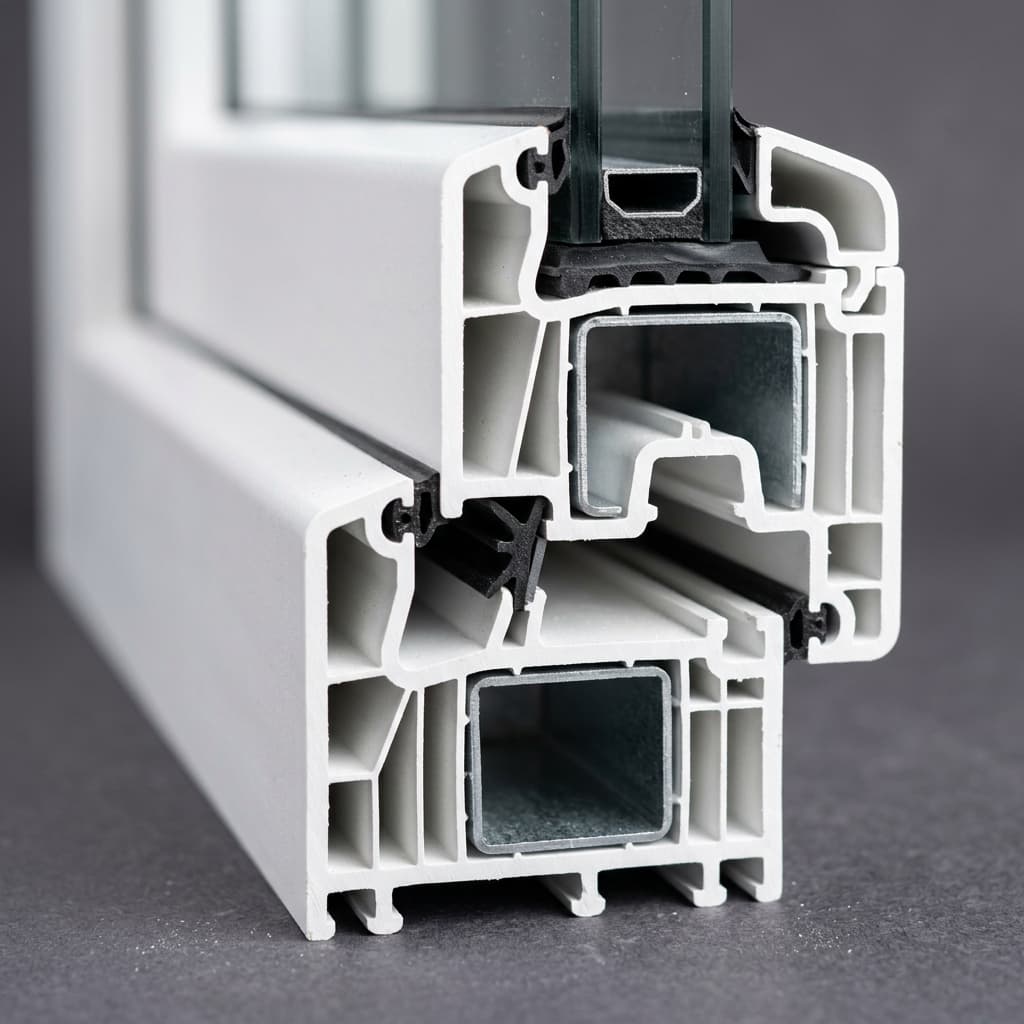
uPVC material itself is 100% waterproof and non-porous. However, a window's leak resistance depends on the complete system. Sloped track rebates, non-return weep holes, dual EPDM weather gaskets, and perimeter neutral silicone sealing work together to guide rainwater outside. Read our detailed Monsoon Waterproofing Guide for more information.
4. How Long Do uPVC Windows Last?#
Certified Class A uPVC window systems carry a operational lifespan of 30 to 40 years. Because uPVC does not rot, pit, rust, or degrade from humidity, the frame structure outlasts traditional timber. Long-term performance relies on using hot-dipped galvanized steel cores (1.5mm–2.0mm) and high-grade stainless steel hardware.
5. Do uPVC Windows Require Maintenance?#
uPVC windows require minimal maintenance compared to wooden frames that require periodic sanding and varnishing. Routine upkeep involves:
- Wiping frames with mild soapy water twice a year.
- Vacuuming dust out of sliding tracks and drainage weep holes.
- Lubricating hardware hinges and locking cams once annually.
6. Do White uPVC Windows Turn Yellow?#
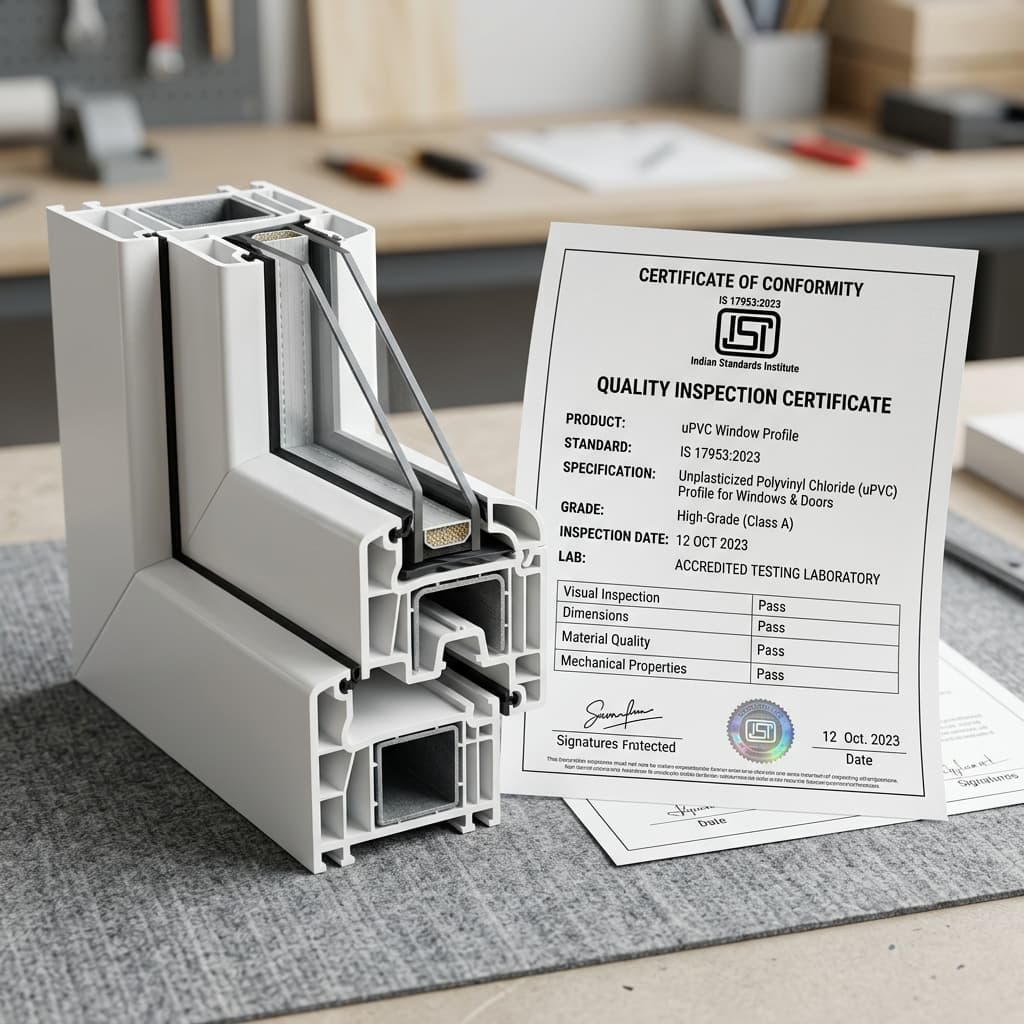
Cheap, unbranded uPVC profiles made with low-grade filler can discolor under harsh UV rays. However, high-quality Class A profiles manufactured to IS 17953:2023 standards contain at least 2.5 to 3.0 parts of Titanium Dioxide (TiO2) per hundred resin parts. This creates an intense UV shield that prevents yellowing, chalking, or cracking under intense Indian sunlight.
7. Are uPVC Windows Energy Efficient?#
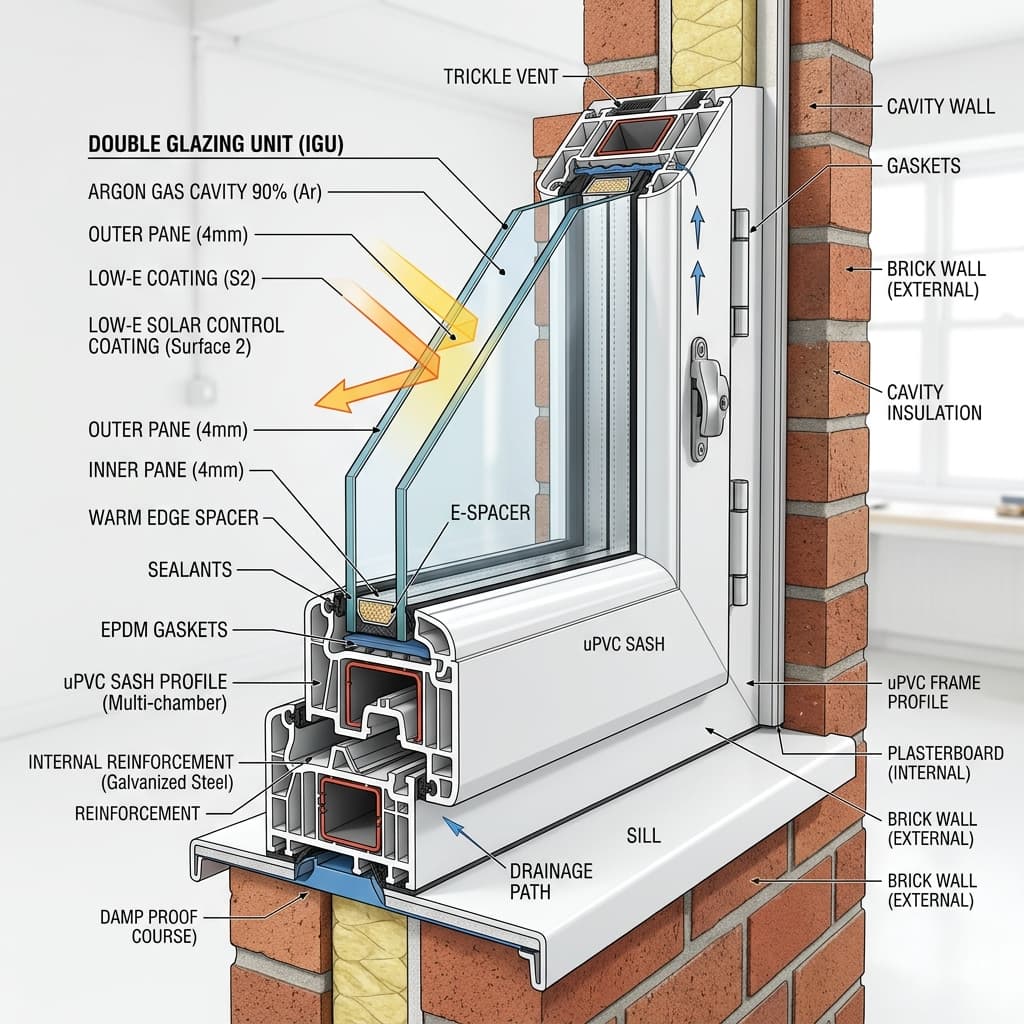
Yes. uPVC is a natural thermal insulator with very low thermal conductivity. When paired with Double Glazed Units (DGU) or Low-E glass, uPVC windows block solar heat radiation, keeping indoor rooms significantly cooler and cutting monthly air conditioning electricity bills by up to 30%.
8. Can uPVC Windows Reduce Outside Noise?#
Yes. Multi-chamber uPVC frames combined with dual-sealed EPDM gaskets provide excellent sound insulation. When fitted with Double Glazed Units (e.g., 6mm Glass + 12mm Air Gap + 6mm Glass) or Laminated Acoustic Glass, uPVC windows reduce external traffic and urban noise by 30 to 40 dB, creating a quiet indoor sanctuary.
9. Are uPVC Windows Secure?#
Modern uPVC windows provide robust protection against forced entry. Key security features include:
- Multi-Point Locking Gear: Locks at 3 to 5 perimeter points with a single handle turn.
- Internally Fitted Glazing Beads: Prevents burglars from removing glass panes from the outside.
- Key-Locking Handles: Prevents sash operation if glass is broken. Learn more in our uPVC Window Security Features Guide.
10. Can uPVC Windows Handle Heavy Monsoon Rain & Winds?#
Yes. Engineered uPVC casement windows press tighter against weather gaskets when wind blows against the sash. For high-rise apartments facing gale-force winds, specified Class A uPVC windows achieve EN 12208 Class 9A watertightness ratings.
11. Which Is Better: uPVC Sliding or Casement Windows?#
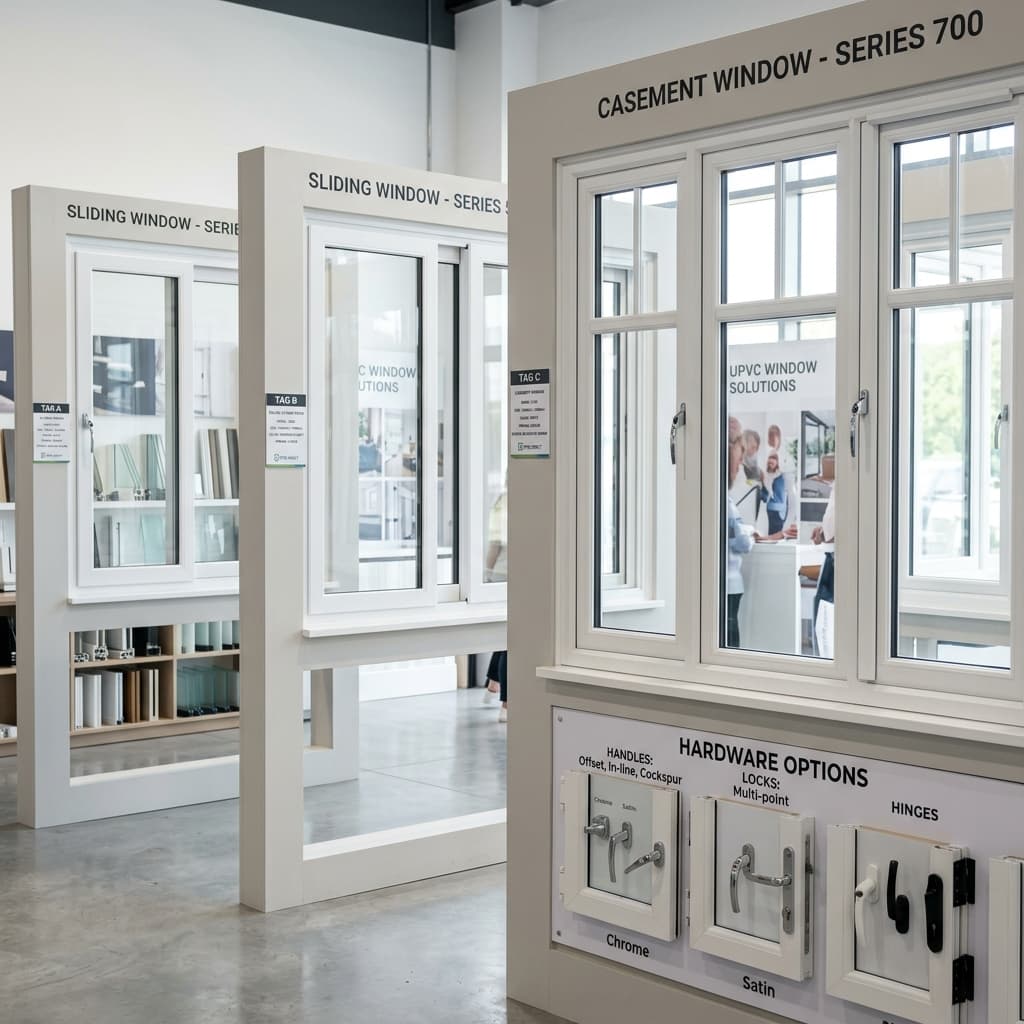
- uPVC Sliding Windows: Best for compact spaces, balconies, and wide panoramic openings where sashes cannot swing outward.
- uPVC Casement Windows: Best for bedrooms and windy facades requiring maximum acoustic soundproofing, airtightness, and 100% opening airflow.
12. Are uPVC Windows Better Than Aluminium Windows?#
Both materials have distinct advantages:
- uPVC: Superior thermal insulation, zero risk of corrosion, fusion-welded watertight corners, and better sound dampening. Read our uPVC vs. Aluminium Comparison.
- Aluminium: Higher structural strength for massive ultra-slim floor-to-ceiling glass walls.
13. Are uPVC Windows Environmentally Friendly?#
Yes. uPVC is 100% recyclable and can be re-extruded up to 10 times without losing structural strength. Furthermore, its 30+ year lifespan and energy-saving thermal insulation significantly reduce a building's overall carbon footprint.
14. How Much Do uPVC Windows Cost in India in 2026?#
uPVC window pricing in India depends on complete system specifications rather than just frame color:
| Cost Factor | Basic Specification | Premium High-Performance Specification |
|---|---|---|
| Profile Class | Class B Profile (2.2mm wall) | Class A Profile (≥ 2.8mm wall) |
| Glass Type | 5mm Single Clear Float | Double Glazed Unit (DGU) / Low-E Glass |
| Locking System | Single Point Latch | Multi-Point Mushroom Cam Locking System |
| Fly Mesh Integration | Optional Fiber Mesh | Integrated SS304 Invisible Mesh |
| Steel Core | Partial 1.0mm Steel | Full 1.5mm–2.0mm Galvanized Steel Core |
Always request itemized quotes detailing profile brand, glass thickness, hardware make, and warranty terms.
15. How Do I Choose the Best uPVC Windows for My Home?#
Follow this simple pre-purchase evaluation checklist:
- Verify BIS Standards: Ensure profiles comply with IS 17953:2023.
- Check Steel Core: Confirm continuous galvanized steel reinforcement inside frames.
- Select Right Glass: Choose double glazing (DGU) for heat/noise control or laminated glass for safety.
- Choose Certified Installers: Professional installation from Samani ECC ensures airtight perimeter sealing and smooth hardware operation.
Conclusion#
uPVC windows represent a smart, long-lasting investment for modern Indian homes. By combining zero-rot polymer profiles, internal steel reinforcement, multi-point security locks, and high-performance energy glass, uPVC delivers exceptional comfort, safety, and energy savings for decades.
Upgrading your home's windows in 2026? Contact Samani ECC today for expert consultations, factory-direct quotes, and certified installation across India.
Keywords

Abdus Salam
Expert Contributor
Expert in architectural aluminium systems and uPVC fenestration with over 20 years of experience in the Indian construction industry.
Related Articles
Buyer's Guide
uPVC Windows: What Nobody Tells You Before You Buy in India (2026 Guide)
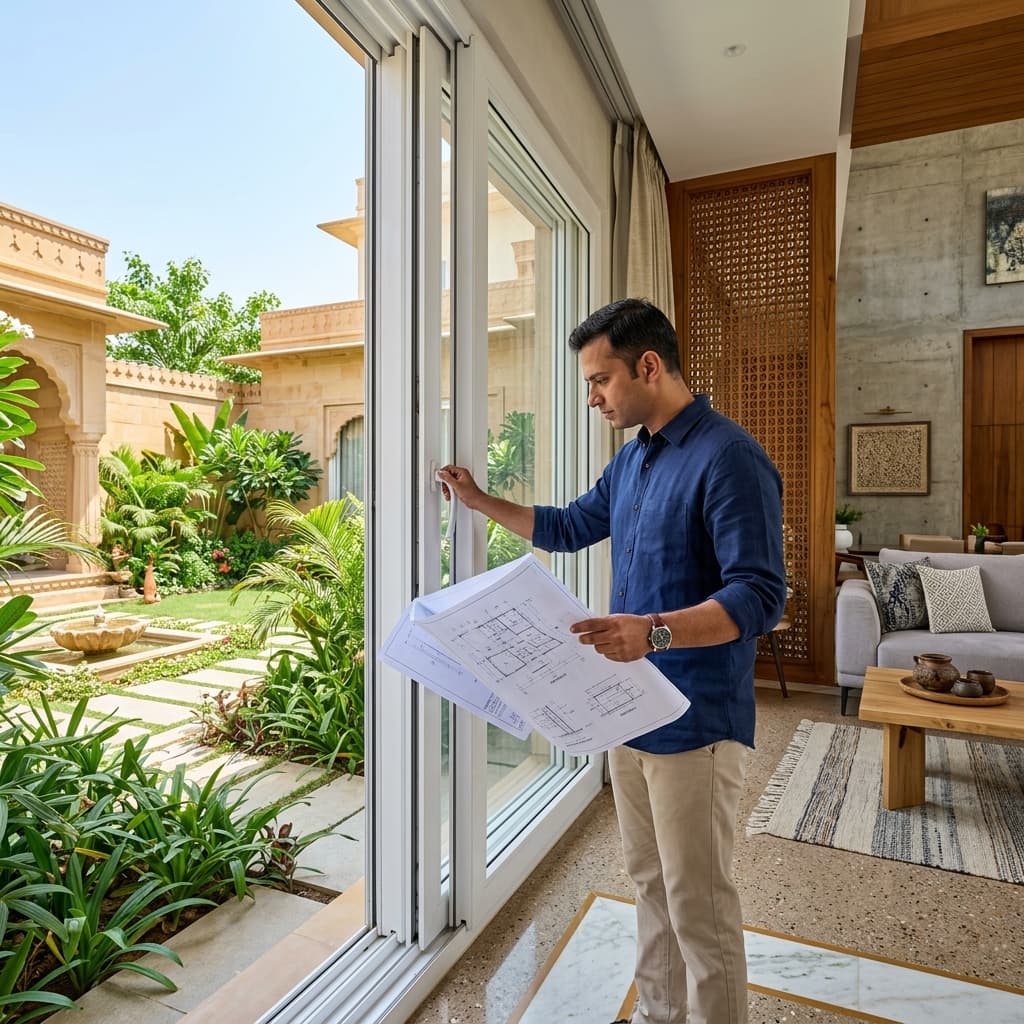
Uncover the hidden truths about buying uPVC windows in India. Learn why price per sq ft can be misleading, how to evaluate profile standards (IS 17953:2023), glass, hardware, and installation.
Commercial Guide
uPVC Windows for Commercial Buildings – Offices, Retail & Industrial (2026 Guide)
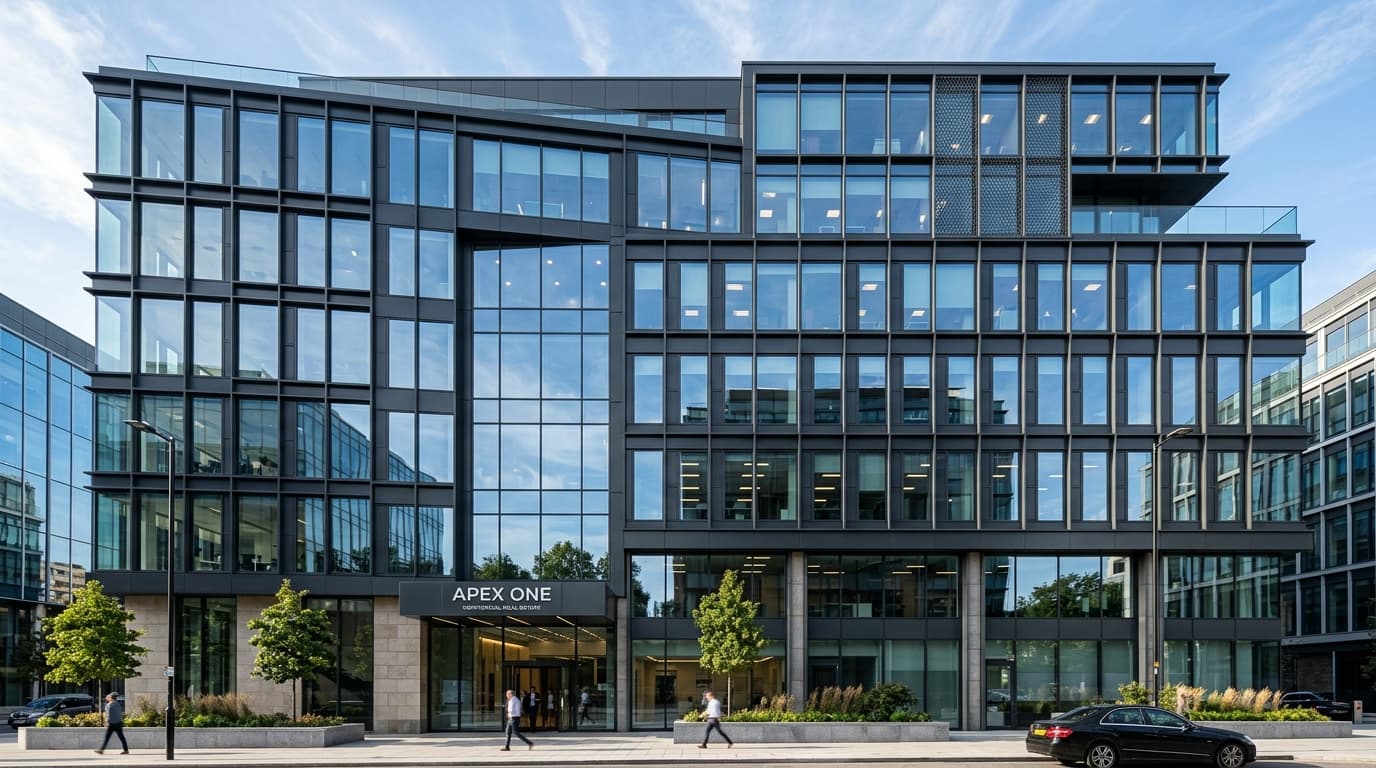
Explore how uPVC windows and doors perform in commercial buildings. A complete guide on specifications for offices, retail stores, and industrial facilities in India.
Energy Efficiency
uPVC Windows for Energy Saving – How Much Can You Actually Save? (2026 Guide)
Discover how much electricity uPVC windows can actually save. Learn about thermal conductivity, double glazing (DGU), Low-E coatings, solar heat gain, AC workload reduction, and payback period calculations.
Ready to Transform Your Space?
Get a free, no-obligation technical consultation and personalized quote for your premium aluminium window and door requirements. Our experts are ready to bring your vision to life.
