
uPVC Window Profiles – What to Look For & Why It Matters (2026 Guide)

Abdus Salam
Expert Contributor
Category: Technical Guide | Read Time: 9 min | Updated: August 2026
Introduction#
When shopping for new windows, most homeowners focus on glass type, frame color, window opening design, or the upfront uPVC windows price. However, there is one critical component that receives far less attention, even though it dictates the window's performance, strength, and lifespan—the uPVC window profile.
The uPVC window profile forms the structural framework of the window. It holds the heavy glass units, supports multi-point locking hardware, retains EPDM weather seals, and integrates internal drainage channels.
Two windows may look identical from a distance, yet perform completely differently over time because their internal profile engineering, wall thickness, and steel reinforcements are fundamentally different.
If you are planning to install new windows or replace aging timber frames in an Indian home, understanding uPVC profile specifications will help you make an informed choice that delivers decades of trouble-free performance.
What Is a uPVC Window Profile?#
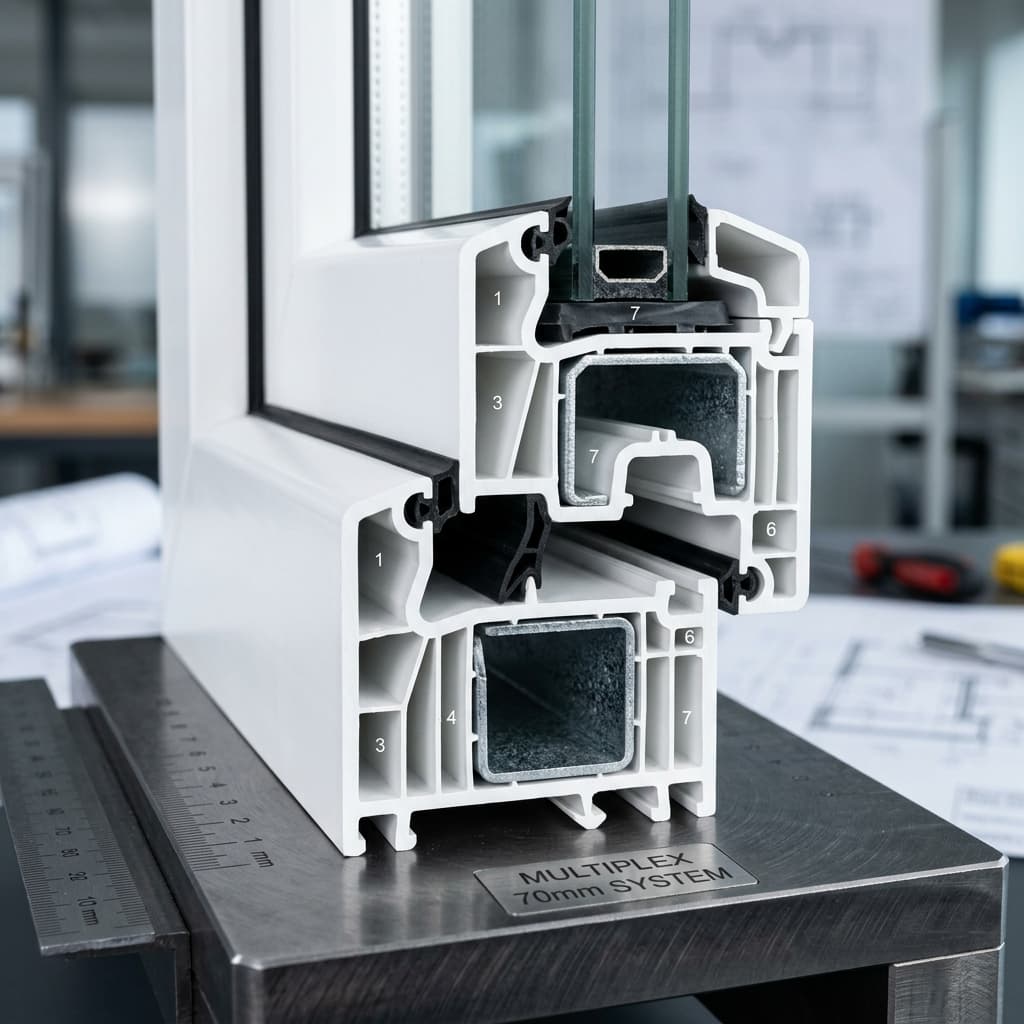
A uPVC window profile is an extruded unplasticized polyvinyl chloride section engineered with precision internal geometry. These profiles form the outer frame, sash, mullions, and transoms of windows and doors.
Inside the profile, engineered internal chambers and channels control:
- Thermal Insulation: Trapping static air chambers to reduce solar heat conduction.
- Structural Load Capacity: Housing hot-dipped galvanized steel reinforcement bars.
- Water Management: Channeling monsoon rainwater safely outside.
- Acoustic Dampening: Blocking urban noise transmission.
Why Does the uPVC Profile Matter?#
The profile is not merely a border for glass—it is the functional backbone of the window assembly. Key performance parameters controlled by the profile include:
1. Thermal Insulation#
uPVC is naturally non-conductive. A well-engineered profile with multi-chamber interior design minimizes thermal transfer between the hot exterior climate and your home's air-conditioned interior, lowering summer electricity bills.
2. Weather & Monsoon Protection#
A high-performance profile incorporates dedicated drainage slopes and dual-gasket grooves. During heavy monsoon downpours in cities like Mumbai or Kolkata, rain drains out through non-return weep holes rather than leaking into your living room.
3. Structural Strength & Wind Load Stability#
Large glass panels exert significant weight and wind load pressure. The profile engineering determines whether wide sashes will sag over time or withstand high-rise wind loads.
4. Acoustic Noise Isolation#
When combined with double glazed acoustic glass (DGU), a high-density uPVC profile prevents frame resonance and sound leakage around window sashes.
6 Important Things to Check Before Choosing a Profile#
Do not judge window quality by looks or price quotes alone. Ask your fabricator or supplier for these 6 technical profile specifications:
1. Profile Outer Wall Thickness#
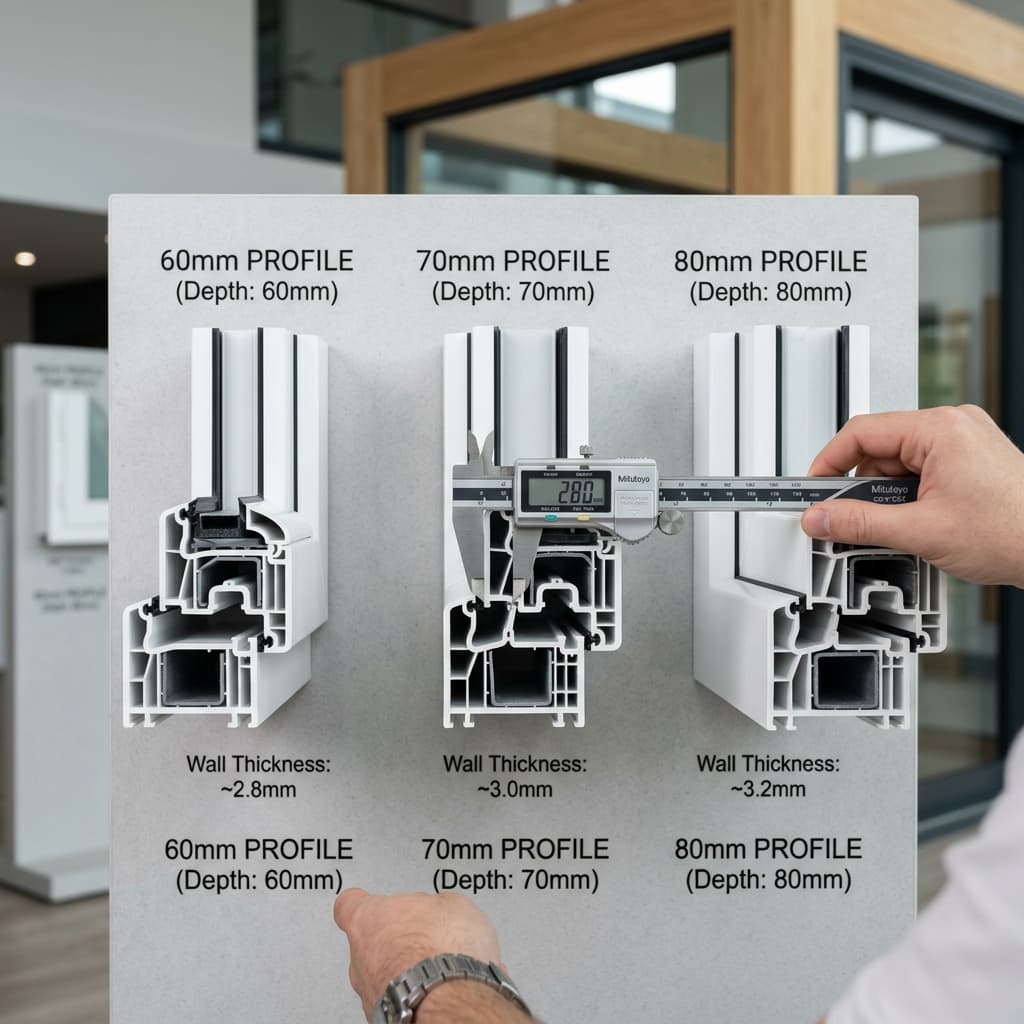
Outer wall thickness dictates frame rigidity and screw-retention strength. Under EN 12608 European standards, uPVC profiles are classified as:
- Class A (Best Quality): Outer wall thickness ≥ 2.8 mm. Essential for high-rise buildings and large openings.
- Class B (Standard): Outer wall thickness ≥ 2.5 mm. Suitable for standard residential windows.
- Class C (Low Grade): Outer wall thickness < 2.5 mm. Prone to cracking and frame distortion over time.
2. Profile System Depth#
Profile depth (measured from front to back face) influences structural stability and glass unit compatibility:
- 60mm Profile Systems: Suitable for single glazing and slim 16mm DGUs in basic openings.
- 70mm / 80mm Profile Systems: Premium systems accommodating thick 24mm–32mm Double Glazed Units, acoustic laminated glass, and heavy steel reinforcement.
3. Internal Steel Reinforcement#
Because uPVC vinyl is semi-flexible, structural profiles require internal reinforcement:
- Material: Hot-dipped galvanized steel to prevent internal rusting.
- Thickness: Minimum 1.5mm to 2.0mm thick steel box sections inserted into main sash and frame chambers.
- Importance: Prevents sash sag, frame distortion, and hardware screw pull-out.
4. Sealing System (EPDM Gaskets)#
High-grade profiles integrate dual continuous EPDM (Ethylene Propylene Diene Monomer) synthetic rubber seals that remain soft and elastic over years of heat and UV exposure.
5. Glazing Bead Compatibility#
Ensure the profile design accepts various glass unit thicknesses (from 5mm single float to 28mm acoustic DGUs) with clip-in interior glazing beads.
6. UV Compound Formulation#
Indian sunlight subjects window frames to severe ultraviolet radiation. Quality uPVC profiles contain at least 8 to 10 parts of Titanium Dioxide (TiO2) per 100 parts resin to prevent yellowing, chalking, or thermal embrittlement.
Technical Profile Specification Checklist#
| Specification Parameter | Recommended Benchmark | Why It Matters |
|---|---|---|
| Profile Wall Class | Class A (≥ 2.8 mm) | Prevents frame flexing and corner joint failure |
| Profile Depth | 70mm to 80mm System | Allows thick acoustic DGU glass units |
| Steel Core Thickness | 1.5mm – 2.0mm Galvanized Steel | Handles heavy glass load and wind pressure |
| UV Resistance | High TiO2 content | Prevents yellowing under intense Indian sunlight |
| Gasket Material | Dual EPDM Rubber Seals | Maintains air-tight & watertight sealing |
uPVC Profile vs Window Style Selection#
While homeowners spend time choosing between opening designs, the profile must be engineered to suit the specific window style:
- uPVC Sliding Windows: Require reinforced multi-track outer frames with heavy-duty brass rollers and anti-lift blocks.
- uPVC Casement Windows: Require thick sash profiles capable of supporting friction stay hinges and multi-point locking gear.
- uPVC French Doors & Balcony Windows: Utilize wide 70mm+ door sash profiles with heavy 2.0mm steel reinforcement to support tall glass sashes without bending.
Why Cheap uPVC Windows Fail#
Choosing the cheapest quotation often leads to hidden specification cuts:
- Thin Profile Walls (< 2.0 mm): Cracks easily under thermal stress.
- Omitted or Thin Steel Reinforcement (< 1.0 mm): Window sashes sag, making handles difficult to lock.
- Low TiO2 Content: Profile turns yellow or brittle after 3 to 4 years of sun exposure.
- Cheap PVC Seals: Hardens, shrinks, and leaks rainwater into walls during monsoons.
Investing in a certified, Class A uPVC profile system costs slightly more upfront but saves thousands in repair and replacement costs over a 30-year lifespan.
Why Professional Installation Matters#
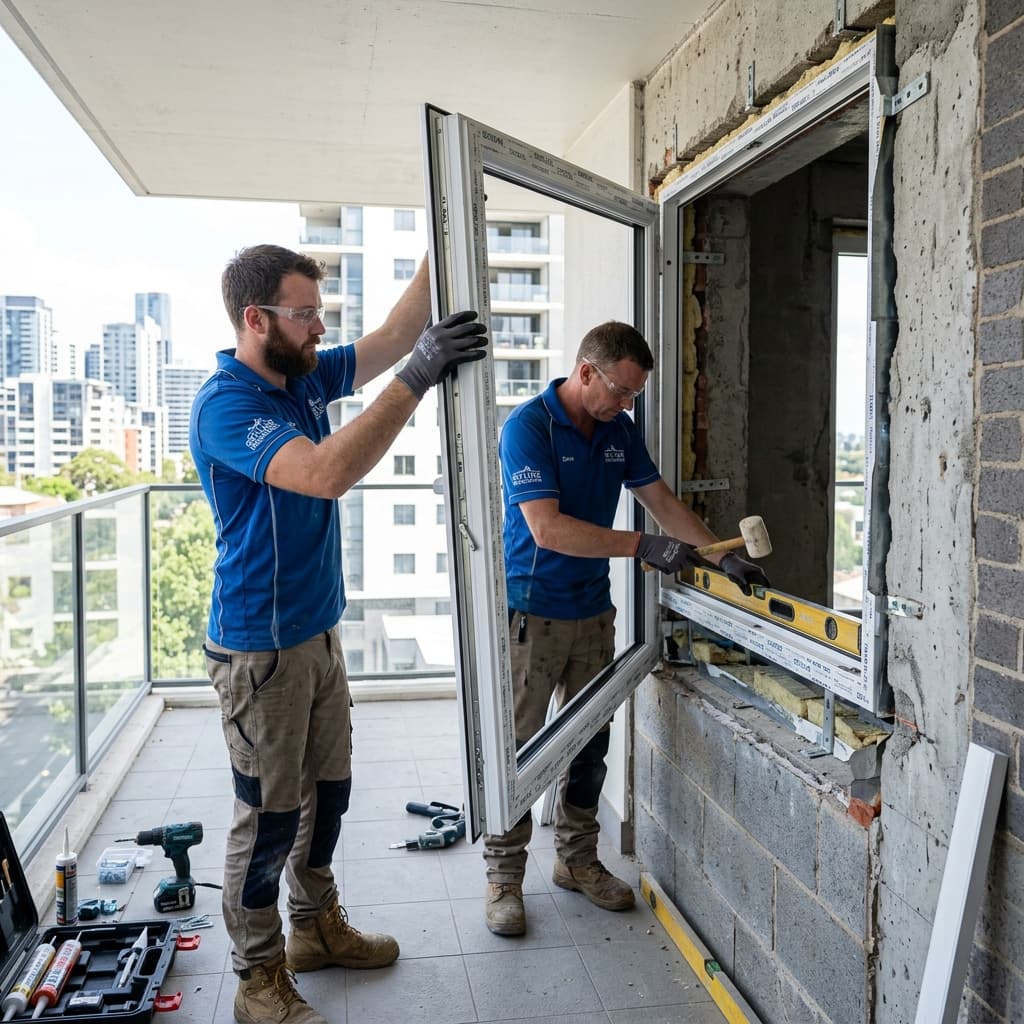
Even a premium Class A uPVC profile will leak or rattle if installed improperly. A certified installation team ensures:
- Accurate laser measurement of masonry openings.
- Plumb, square, and level alignment using structural shims.
- Heavy-duty frame anchor fixing into masonry or RCC lintels.
- Continuous perimeter expansion foam and exterior weather-grade silicone sealing.
Frequently Asked Questions (FAQs)#
1. How can I check the quality of a uPVC window profile?#
Before buying, ask the company about the profile specifications. Check the profile design, depth, chambers, reinforcement, sealing system, and glass compatibility. Do not judge a uPVC profile only by its appearance.
2. Does a thicker uPVC profile mean better quality?#
Not always. A thicker profile alone does not guarantee better performance. Window strength also depends on the profile design, reinforcement, glass weight, hardware, and installation quality.
3. What is reinforcement in a uPVC window profile?#
Reinforcement is an additional material used inside some uPVC profiles to provide extra strength and stability. It may be important for large windows, heavy glass, bigger openings, or areas exposed to higher wind pressure.
4. Can the same uPVC profile be used for every window?#
Not always. Small bathroom windows and large living room windows may have different requirements. Larger windows may need a different profile specification because they carry more glass weight and may face greater wind pressure.
5. Why do uPVC window profiles come in different depths?#
Different profile depths are designed for different window requirements. Profile depth can affect the window's structural design, glass compatibility, sealing arrangement, and overall performance. The right profile should be selected according to the size and purpose of the window.
6. Can a uPVC profile support double-glazed glass?#
Many modern uPVC profile systems can support double-glazed glass. However, the exact glass thickness supported depends on the profile design. Always confirm glass compatibility before placing your order.
7. Does the colour of a uPVC profile affect its quality?#
Colour mainly affects the appearance of the window. However, when choosing black, brown, wood-effect, or other coloured profiles, it is important to check the quality of the surface finish and whether it is suitable for your local climate.
8. Can a poor-quality profile affect window alignment?#
Yes, profile quality can be one of several factors that affect window performance and alignment. Other important factors include reinforcement, hardware, glass weight, manufacturing quality, and professional installation.
9. Should I ask for a uPVC profile sample before buying?#
Yes, especially when you are ordering windows for an entire home or a large project. A profile sample can help you check the finish and design. You should also ask for the complete technical specifications of the window system.
Conclusion#
While the profile may not be the most visually striking part of a finished window, it is the fundamental foundation of the entire system. It dictates thermal insulation, structural strength, weatherproofing, soundproofing, and glass compatibility.
When selecting uPVC windows for your home, look beyond surface looks and price tags. Evaluate profile depth, wall thickness, steel reinforcement, gasket quality, and installation expertise as a complete package.
Ready to choose the right uPVC profiles for your home? Contact Samani ECC today for an expert consultation and customized quotation tailored to your architectural needs.
Keywords

Abdus Salam
Expert Contributor
Expert in architectural aluminium systems and uPVC fenestration with over 20 years of experience in the Indian construction industry.
Related Articles

Technical Guide
Multi-Chamber uPVC Windows – What Are They and Why Do They Matter? (2026 Guide)
Discover how multi-chamber uPVC windows improve thermal insulation, reduce urban noise, enhance structural strength, and lower AC energy bills in Indian homes.

Technical Guide
Noise Reduction uPVC Windows – The Ultimate Guide for Indian Homes (2026)
Learn how noise reduction uPVC windows block traffic, construction, and city noise in Indian homes. Compare acoustic glass types, STC ratings, and soundproof window styles.
Technical Guide
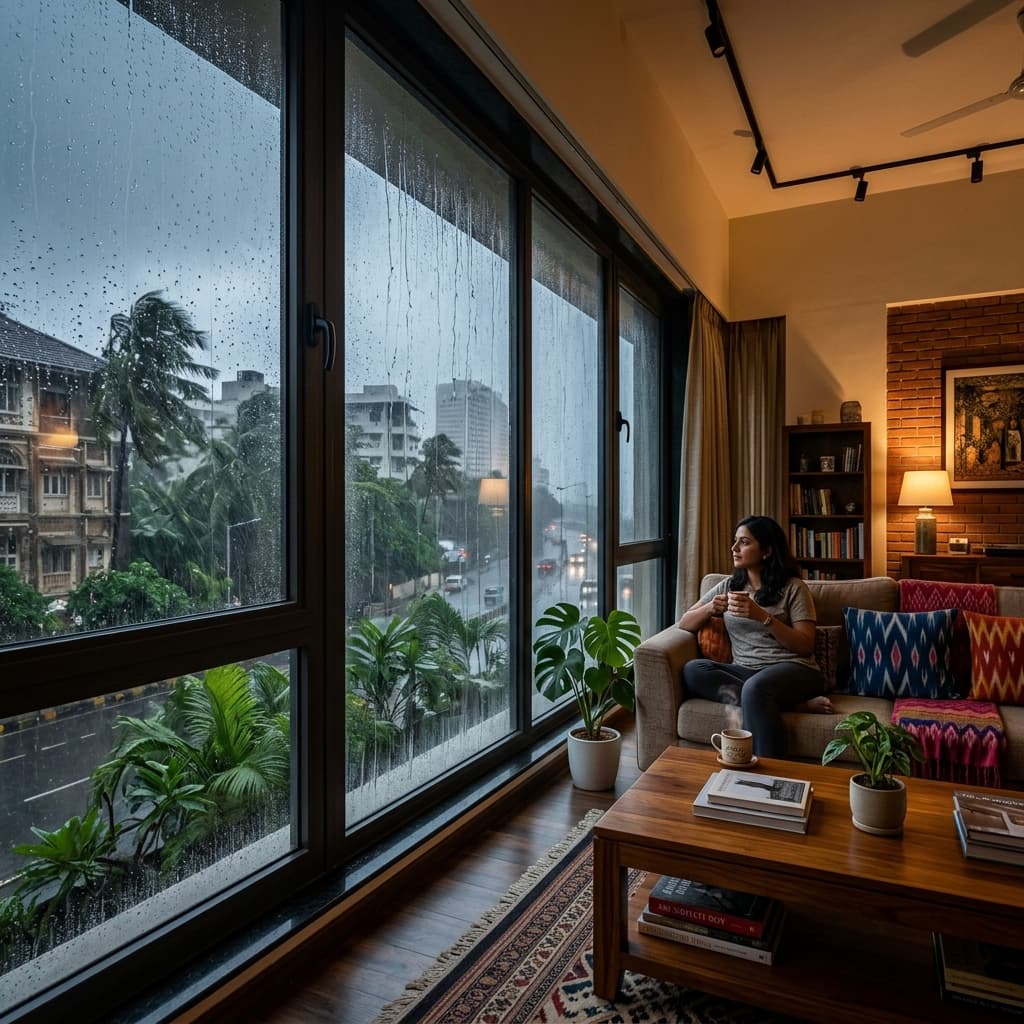
uPVC Windows for Monsoon Season – Are They Truly Waterproof? (2026 Guide)
Discover whether uPVC windows are truly waterproof during Indian monsoons. Learn how sloped drainage channels, EN 12208 watertightness standards, and EPDM seals prevent leaks.
Ready to Transform Your Space?
Get a free, no-obligation technical consultation and personalized quote for your premium aluminium window and door requirements. Our experts are ready to bring your vision to life.
