uPVC Window Glass Options – Single, Double Glazed, Tinted, Frosted & More (2026 Guide)

Abdus Salam
Expert Contributor
Category: Buying Guide | Read Time: 9 min | Updated: August 2026
Introduction#
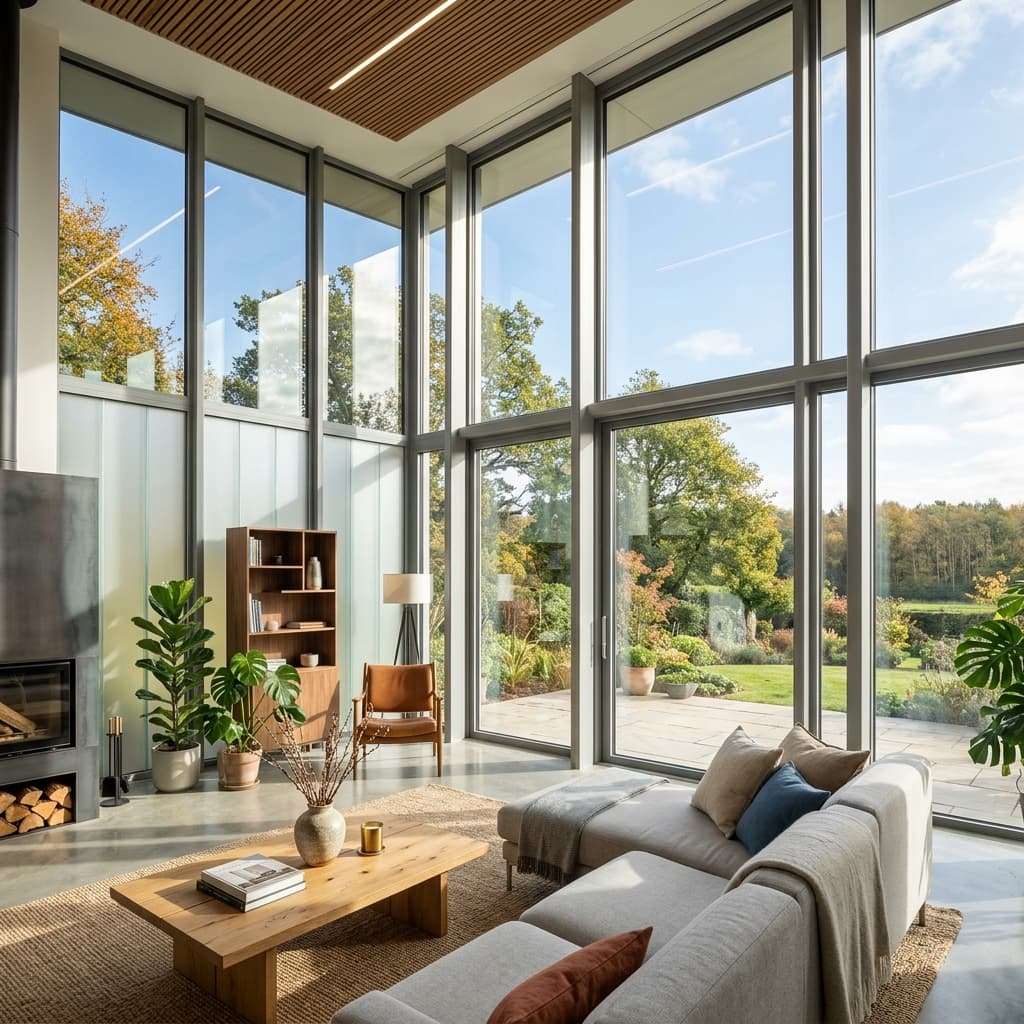
The glass you specify for your uPVC windows plays a far larger role in your daily living comfort than most homeowners realize. While the multi-chambered uPVC frame provides structural strength and weather sealing, the glass pane covers 75% to 85% of the total window surface area.
Your choice of glass directly determines:
- How much solar heat enters your living room during hot Indian summers.
- How effectively your home blocks loud street and traffic noise.
- Your degree of personal daytime and nighttime privacy.
- Monthly air conditioning power bills.
- Physical security against forced entry or accidental breakage.
Whether you are building a new house from scratch, renovating a city apartment, or replacing old timber and iron frames, choosing the right glass type transforms ordinary windows into high-performance fenestration systems.
This guide explores the most popular glass options used in modern uPVC windows, their performance benefits, room-by-room recommendations, and estimated price additions per square foot in 2026.
Why Glass Selection Matters#
A window is an engineered barrier controlling light, heat, sound, and air ingress. Matching high-grade uPVC profiles with the correct glass unit delivers key benefits:
- Indoor Thermal Comfort: Regulates room temperatures during scorching heatwaves.
- Acoustic Sound Insulation: Reduces traffic and neighborhood noise by up to 80%.
- Monthly Energy Savings: Minimizes air conditioning cool air loss.
- Enhanced Privacy: Obscures unwanted line-of-sight from neighboring buildings.
- UV Protection: Shields expensive interior furniture, carpets, and wooden floors from fading.
- Impact Safety: Prevents hazardous sharp splinters if accidental impact occurs.
Types of Glass for uPVC Windows#
1. Single Glazed Glass#
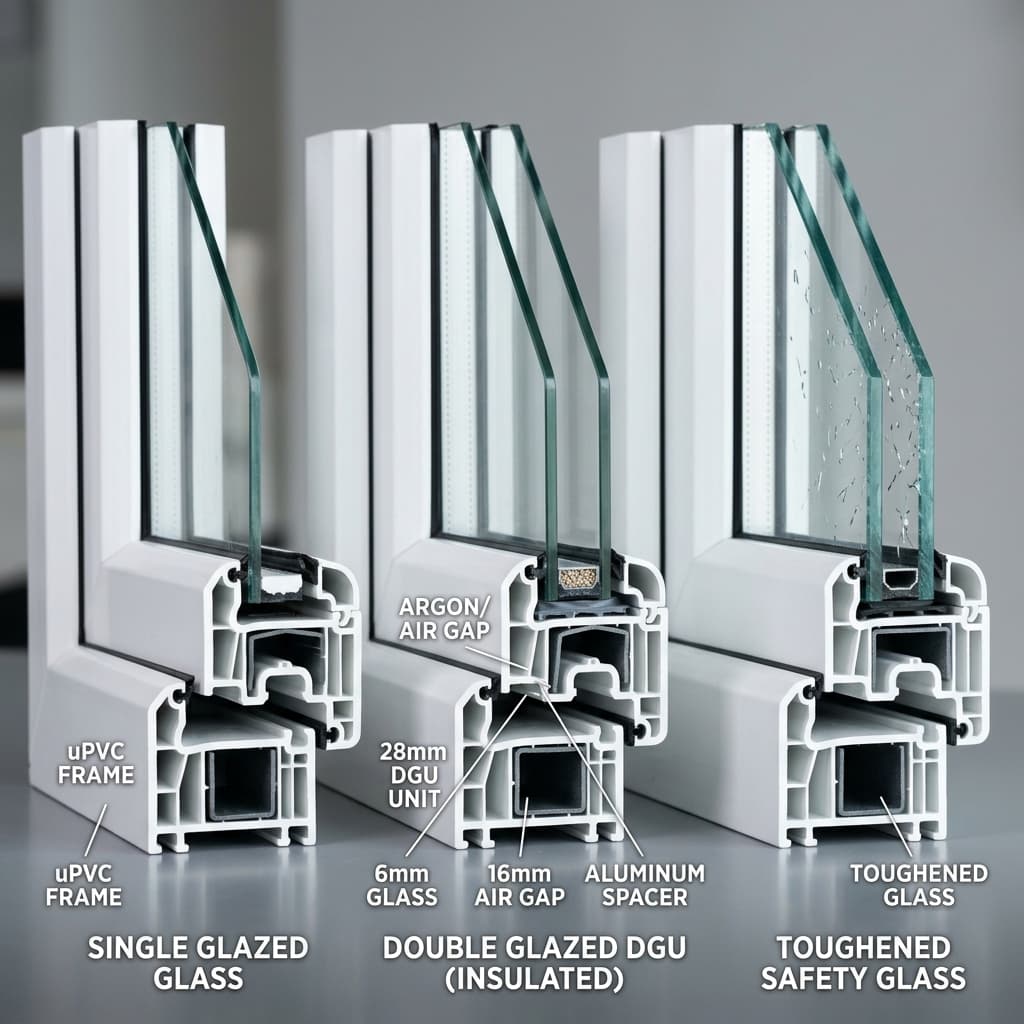
Single glazed glass consists of a single float glass pane (typically 4mm to 6mm thick) fitted inside the window frame.
- Best For: Low-budget utility areas, staircases, covered balconies, and mild climate locations.
- Key Advantages: Highly affordable, lightweight, and allows maximum natural daylight.
- Limitations: Minimal thermal insulation and poor soundproofing.
While single glazing is economical, most modern Indian homeowners prefer double glazing or safety glass for primary living spaces.
2. Double Glazed Glass (DGU / Insulated Glass Units)#
Double glazed glass consists of two glass sheets separated by an aluminum or warm-edge spacer bar, creating a sealed 12mm or 16mm air/argon gas gap.
- Best For: Living rooms, bedrooms facing busy roads, west-facing walls, and high-rise apartments.
- Key Advantages:
- Exceptional thermal insulation (cuts solar heat gain significantly).
- Superior noise reduction (blocks up to 35 dB of street sound).
- Eliminates indoor condensation during monsoons and winters.
- Reduces air conditioning power consumption by up to 30%.
3. Tinted Glass (Solar Control)#
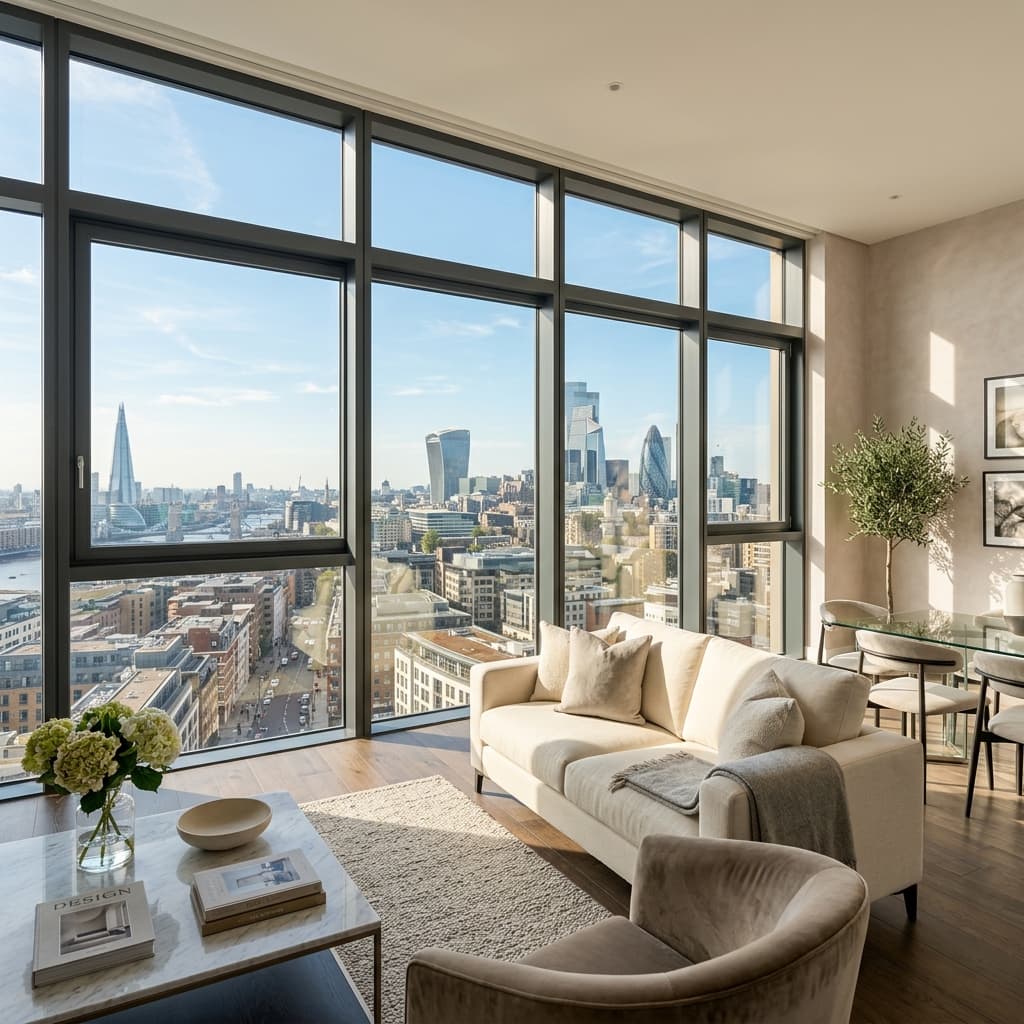
Tinted glass incorporates metallic oxides during manufacturing to reduce direct solar glare while maintaining crisp outdoor visibility.
- Best For: West-facing windows, high-rise living rooms, office cabins, and sunny facades.
- Key Advantages:
- Blocks harmful ultraviolet (UV) rays.
- Keeps room interiors cool during peak afternoon hours.
- Improves daytime privacy from the outside.
- Available in stylish Grey, Bronze, Green, and Blue hues.
4. Frosted Glass (Satin / Obscure Glass)#
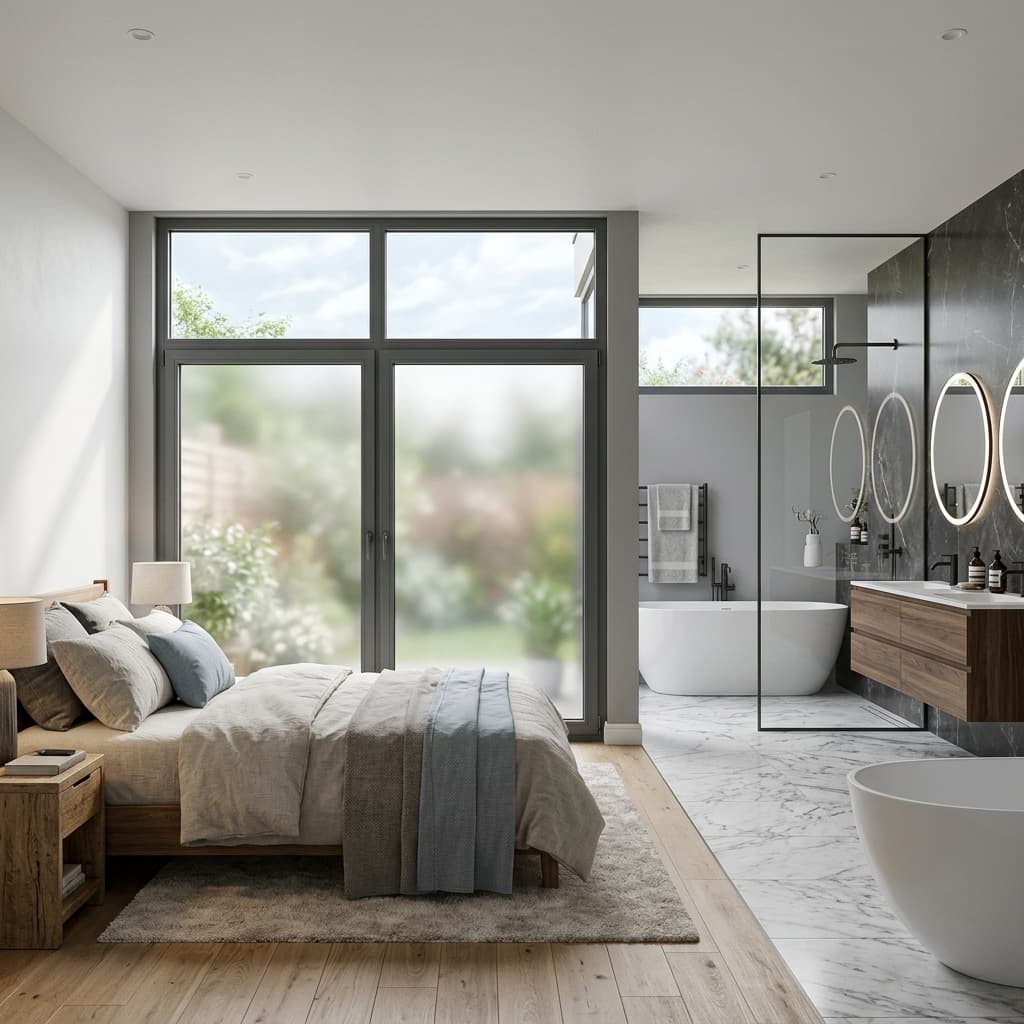
Frosted glass features an acid-etched or sandblasted surface that diffuses light, preventing clear line-of-sight while allowing soft daylight entry.
- Best For: Bathrooms, ensuite bedrooms, ground-floor windows, and office partition doors.
- Key Advantages:
- Provides 100% privacy without requiring dark curtains.
- Creates soft, diffused natural daylighting.
- Easy to clean and resistant to fingerprint smudges.
5. Toughened Glass (Tempered Safety Glass)#
Toughened glass is heat-treated to be 4 to 5 times stronger than standard float glass. If impacted forcefully, it crumbles into tiny, harmless blunt fragments instead of sharp dangerous shards.
- Best For: Large floor-to-ceiling uPVC sliding windows, uPVC French doors, balcony enclosures, and children's bedrooms.
- Key Advantages:
- Exceptional structural strength and thermal shock resistance.
- High safety rating compliance for high-rise buildings.
6. Laminated Acoustic Glass#
Laminated glass consists of two glass sheets bonded together with a tough polyvinyl butyral (PVB) acoustic interlayer.
- Best For: Soundproof bedrooms near highways or airports, ground-floor security windows.
- Key Advantages:
- Maximum soundproofing performance (cuts noise up to 42 dB).
- High security—even if shattered, the glass remains stuck to the PVB interlayer, preventing intruders from entering.
- Blocks 99% of damaging UV rays.
Room-by-Room Glass Recommendations#
To optimize both performance and project budget, select glass types tailored to each room's requirements:
| Room Type | Primary Need | Recommended Glass Type |
|---|---|---|
| Master Bedroom | Soundproofing & Privacy | Laminated Acoustic DGU or Frosted DGU |
| Living Room / Balcony | Daylight & Strength | Double Glazed (DGU) or Toughened Clear |
| West-Facing Windows | Heat & Glare Reduction | Tinted Solar Control DGU |
| Bathrooms | Total Privacy | Frosted / Satin Glass |
| Children's Bedroom | Impact Safety | Toughened Laminated Glass |
Estimated Glass Price Additions for uPVC Windows (2026)#
The total cost of uPVC window installations depends on both the uPVC profile frame price and the glass specification selected:
| Glass Type | Approx. Price Addition (Per Sq. Ft.) | Key Performance Benefit |
|---|---|---|
| Single Clear Float (5mm/6mm) | Base Price | Budget-friendly daylighting |
| Frosted / Satin Glass | + ₹40 – ₹100 / sq ft | Privacy without curtains |
| Toughened Safety Glass | + ₹80 – ₹150 / sq ft | 4x impact strength & safety |
| Double Glazed Unit (DGU) | + ₹150 – ₹300 / sq ft | Heat insulation & soundproofing |
| Laminated Acoustic Glass | + ₹200 – ₹350 / sq ft | Maximum soundproofing & anti-burglary security |
Note: Indicative price additions for 2026. Custom tint colors or low-emissivity (Low-E) coatings may vary based on order volume and project location.
How to Choose the Right Glass for Your Home#
Ask yourself these key questions before making your final selection:
- Is outside traffic noise a major concern? Choose Double Glazing (DGU) or Laminated Acoustic Glass.
- Does the room face direct afternoon heat? Opt for Tinted Solar Control or Low-E Double Glazing.
- Is privacy required without blocking daylight? Select Frosted / Satin Glass.
- Is safety or wind pressure a priority for large openings? Specify Toughened Safety Glass.
Maintenance Tips for uPVC Window Glass#
Keep your window glass sparkling and clear with these easy maintenance practices:
- Clean glass panes using a soft microfiber cloth and a mild glass cleaner.
- Avoid using abrasive pads or harsh chemical acids that can scratch glass coatings.
- Wipe weather seal gaskets clean to prevent dirt accumulation.
- Ensure frame drainage slots remain free of dust for smooth rainwater drainage.
Frequently Asked Questions (FAQs)#
1. Can I use different types of glass for different windows in the same house?#
Yes. In fact, this is often a practical approach. You can use frosted glass for bathrooms, double-glazed glass for bedrooms facing noisy roads, tinted glass for areas exposed to strong sunlight, and toughened glass for large windows or balcony openings.
2. Which uPVC window glass is best for rooms facing direct afternoon sunlight?#
Tinted or solar-control glass can be a suitable option for rooms that receive strong afternoon sunlight. The right choice depends on how much light, heat control, and visibility you want.
3. Does double-glazed glass make a room darker?#
Not necessarily. Double-glazed units can use clear glass and still allow plenty of natural light into the room. The amount of visible light depends on the specific glass combination and coatings used.
4. Is frosted glass suitable for windows that need ventilation?#
Yes. Frosted glass provides privacy but does not prevent the window from opening. It can be used in openable uPVC window designs where both privacy and ventilation are required.
5. Which glass is better for a balcony-facing uPVC window?#
The best option depends on the location and window size. Toughened glass is often considered for areas where additional impact resistance is required, while laminated or double-glazed configurations may be chosen when security, noise reduction, or insulation is a priority.
6. Can tinted glass help reduce glare inside a room?#
Yes. Tinted glass can reduce the intensity of sunlight and glare entering a room. This can be particularly useful for living rooms, home offices, and rooms with large windows facing strong sunlight.
7. Is laminated glass completely soundproof?#
No window glass is completely soundproof in normal residential applications. However, laminated glass can contribute to better sound control when combined with an appropriate window frame, glazing configuration, sealing system, and professional installation.
8. Can I replace only the glass in an existing uPVC window?#
In many cases, yes, provided the existing frame and sash are compatible with the new glass thickness and weight. A professional should inspect the window before replacing single glazing with thicker or heavier glass configurations.
9. Which glass is best when safety and privacy are both important?#
A suitable solution may involve combining safety glass with a privacy treatment, depending on the application. For example, laminated glass with an appropriate privacy solution can be considered for specific residential requirements.
10. Should I choose the same glass thickness for every room?#
Not always. Different rooms have different requirements. A bathroom may prioritise privacy, a bedroom may prioritise noise reduction, and a living room may prioritise natural light and views. Choosing glass according to the room's purpose can provide better overall performance.
Conclusion#
The right glass transforms standard uPVC windows into a complete architectural solution for thermal comfort, acoustic quiet, privacy, and physical security.
By choosing the ideal combination of multi-chamber uPVC frames and specialized glass units with professional installation from Samani ECC, you ensure a brighter, quieter, and far more energy-efficient home for decades.
Ready to choose the perfect glass for your uPVC windows? Contact Samani ECC today for expert guidance and customized quotes tailored to your home.
Keywords

Abdus Salam
Expert Contributor
Expert in architectural aluminium systems and uPVC fenestration with over 20 years of experience in the Indian construction industry.
Related Articles
Buying Guide
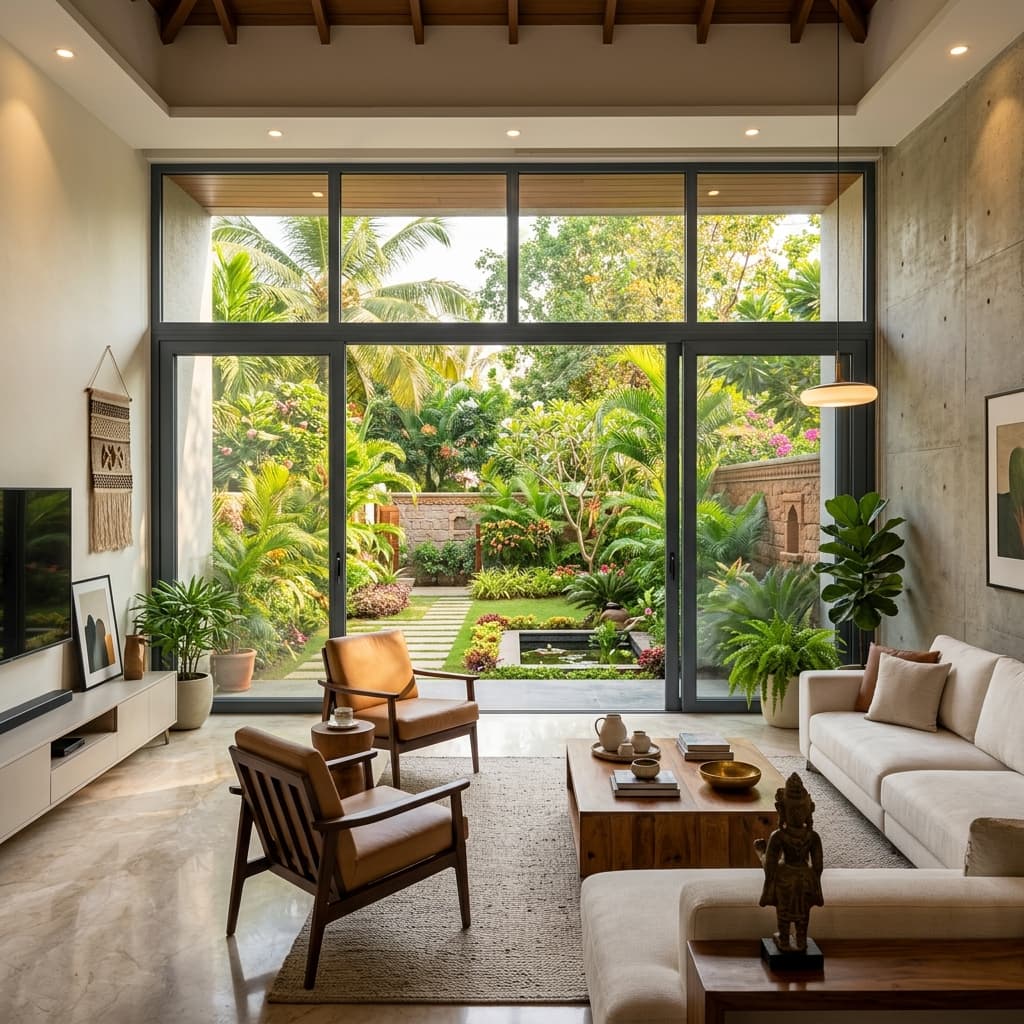
Best Windows for Living Room in India: uPVC Designs, Sizes & Prices (2026 Guide)
A complete guide on choosing the best uPVC windows for your living room in India. Compare sliding, casement, French, and fixed glass designs, standard sizes, and price per sq ft.
Buying Guide
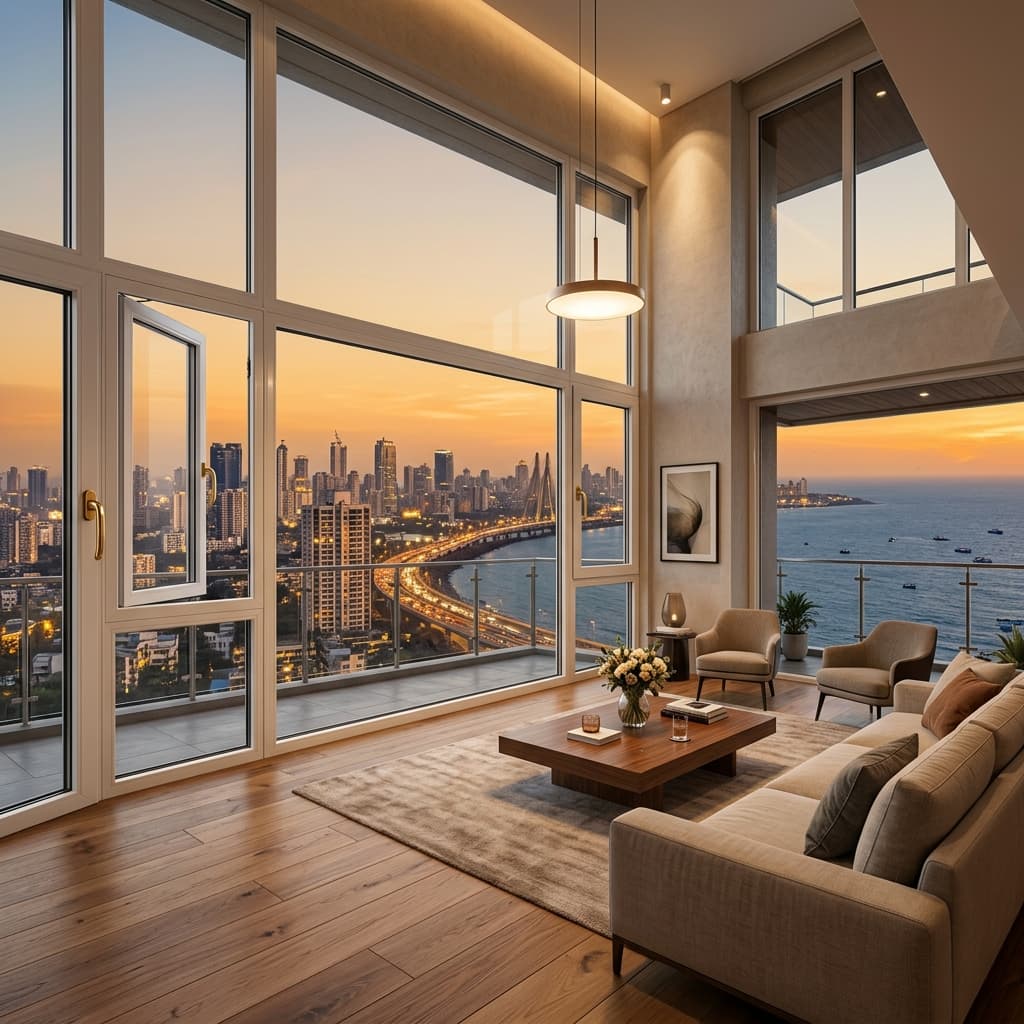
uPVC Windows for Mumbai High-Rise Apartments: Wind & Safety Guide 2026
A complete guide on choosing uPVC windows for high-rise apartments in Mumbai. Learn how to protect your home against wind pressure, monsoon water ingress, noise, and UV rays.
Buying Guide
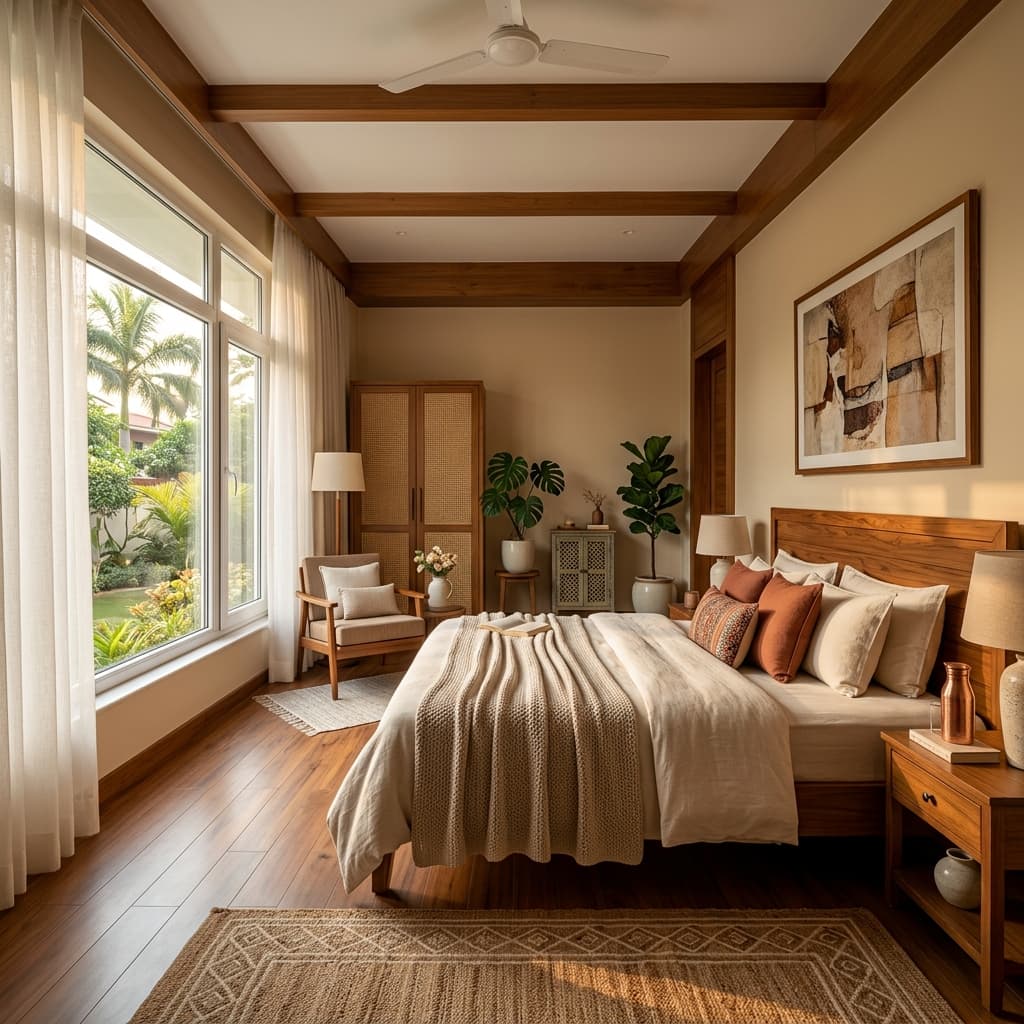
Best Windows for Bedroom in India: Privacy, Ventilation & Light Balance (2026 Guide)
Discover the best windows for bedrooms in India. Learn how uPVC casement, sliding, and French windows balance privacy, fresh air ventilation, daylight, and acoustic noise isolation.
Ready to Transform Your Space?
Get a free, no-obligation technical consultation and personalized quote for your premium aluminium window and door requirements. Our experts are ready to bring your vision to life.
