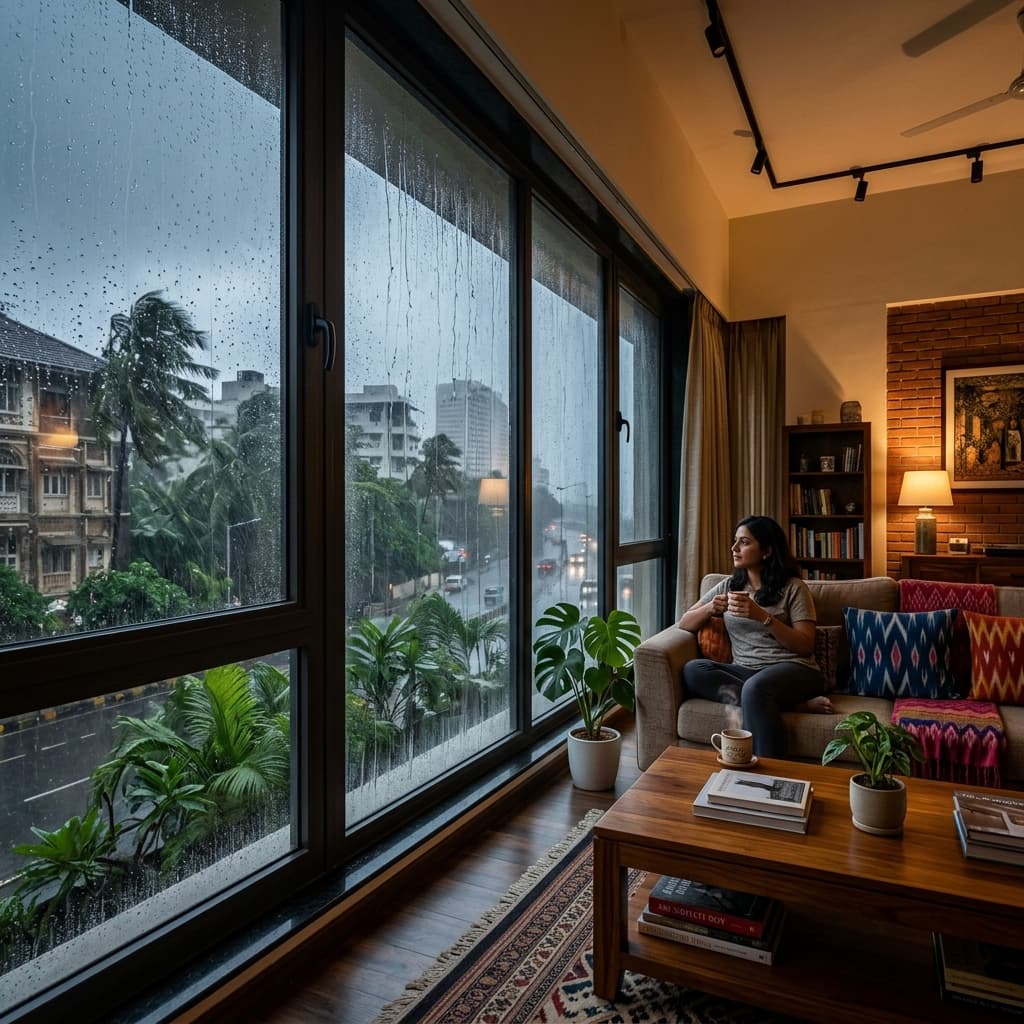
uPVC Windows for Monsoon Season – Are They Truly Waterproof? (2026 Guide)

Abdus Salam
Expert Contributor
Category: Technical Guide | Read Time: 11 min | Updated: August 2026
Introduction#
India's monsoon season puts every building component to the ultimate test. Torrential rainfall, high-velocity storm winds, prolonged atmospheric humidity, and standing water quickly expose hidden vulnerabilities in doors and windows.
When shopping for new fenestration in high-rainfall cities like Mumbai, Thane, Kochi, Goa, or Kolkata, homeowners often ask a fundamental question: Are uPVC windows truly waterproof?
The short technical answer is: Unplasticized PVC resin is 100% waterproof and non-porous, but a window's overall leak-resistance depends on the complete system—profile engineering, EPDM seals, sloped drainage weep holes, glass sealing, and installation precision.
Thinking a uPVC frame alone guarantees zero leaks is like expecting an umbrella to keep you dry when it is held sideways in a gale. Water resistance requires an entire engineered defense assembly.
In this guide, we break down how uPVC windows manage rainwater, analyze European performance standards (EN 12208 for watertightness), troubleshoot common monsoon leak causes, compare uPVC vs. aluminum in rainy weather, and provide a pre-monsoon buyer's checklist.
Do uPVC Window Materials Absorb Water?#
Unlike natural timber or porous masonry, uPVC (unplasticized polyvinyl chloride) has a near-zero water absorption rate.
- Wood / Timber: Absorbs humidity, causing sashes to swell, warp, bind, and foster fungal rot.
- Mild Steel / Iron: Oxidizes upon contact with rain and air, causing heavy rust pitting and mechanical failure.
- uPVC Polymer Material: Does not absorb moisture, swell, warp, or rust—retaining its precise factory dimensions year after year.
However, while the material does not absorb water, a window consists of multiple assembled components: outer frames, sashes, corner joints, weather gaskets, glass panes, and wall perimeter seals. Water leaks occur when one of these secondary components fails.
How an Engineered uPVC Window System Manages Rainwater#
Rather than attempting to block water purely at the surface, high-performance uPVC windows use an active water management system to redirect rainwater safely outside:
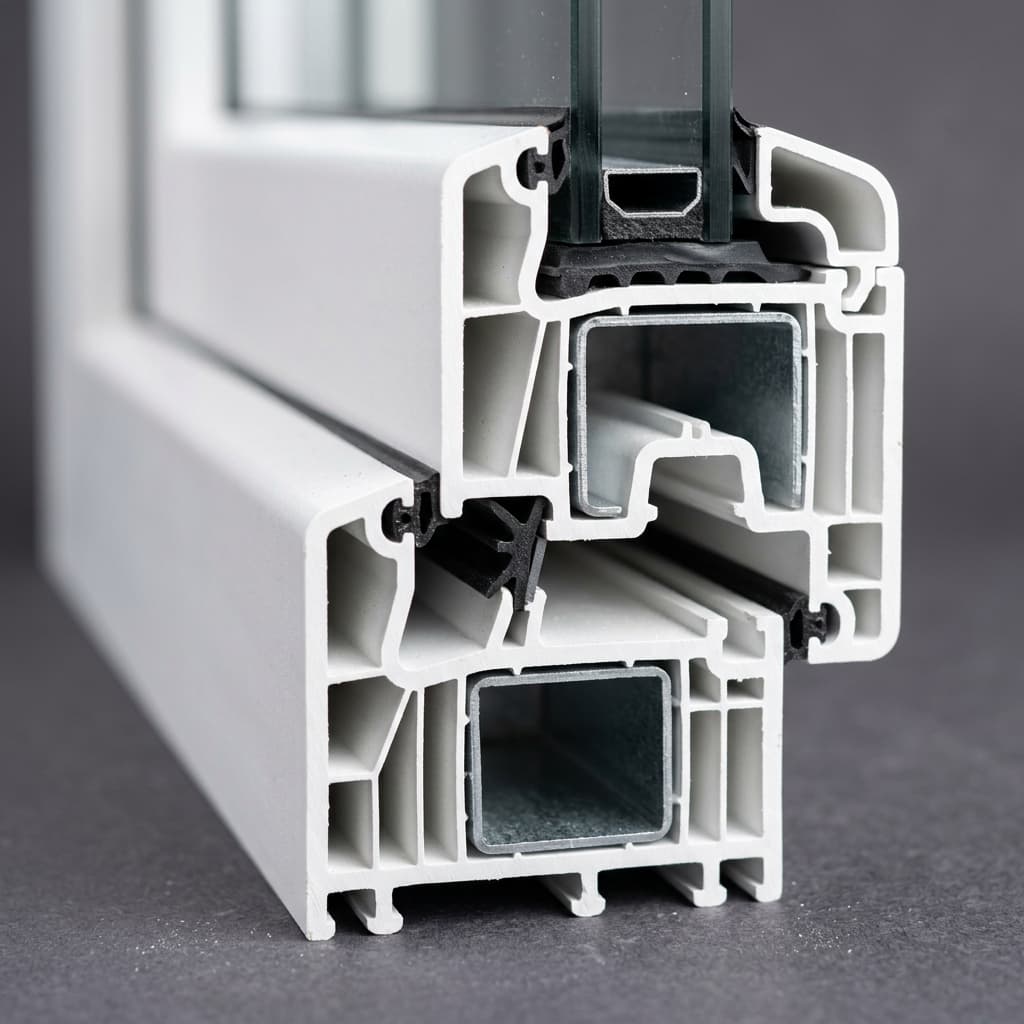
- Sloped Outer Frame Rebates: Internal frame base tracks are extruded at a 5-degree downward slope, ensuring gravity draws water toward exterior drainage channels.
- Concealed Drainage Weep Holes: Non-return drainage slots allow accumulated track water to exit while preventing wind pressure from blowing water backward.
- Dual EPDM Compression Gaskets: Synthetic rubber weather strips compress tightly when sashes lock, blocking wind-driven rain penetration.
- Multi-Chamber Air Pockets: Multi-chamber uPVC profiles trap static air pockets, equalizing internal and external pressure to stop capillary water draw.
- Perimeter Silicone Weather Sealing: Neutral-cure silicone seals the microscopic expansion gap between the uPVC outer frame and concrete wall aperture.
Understanding Watertightness Testing Standards (EN 12208)#
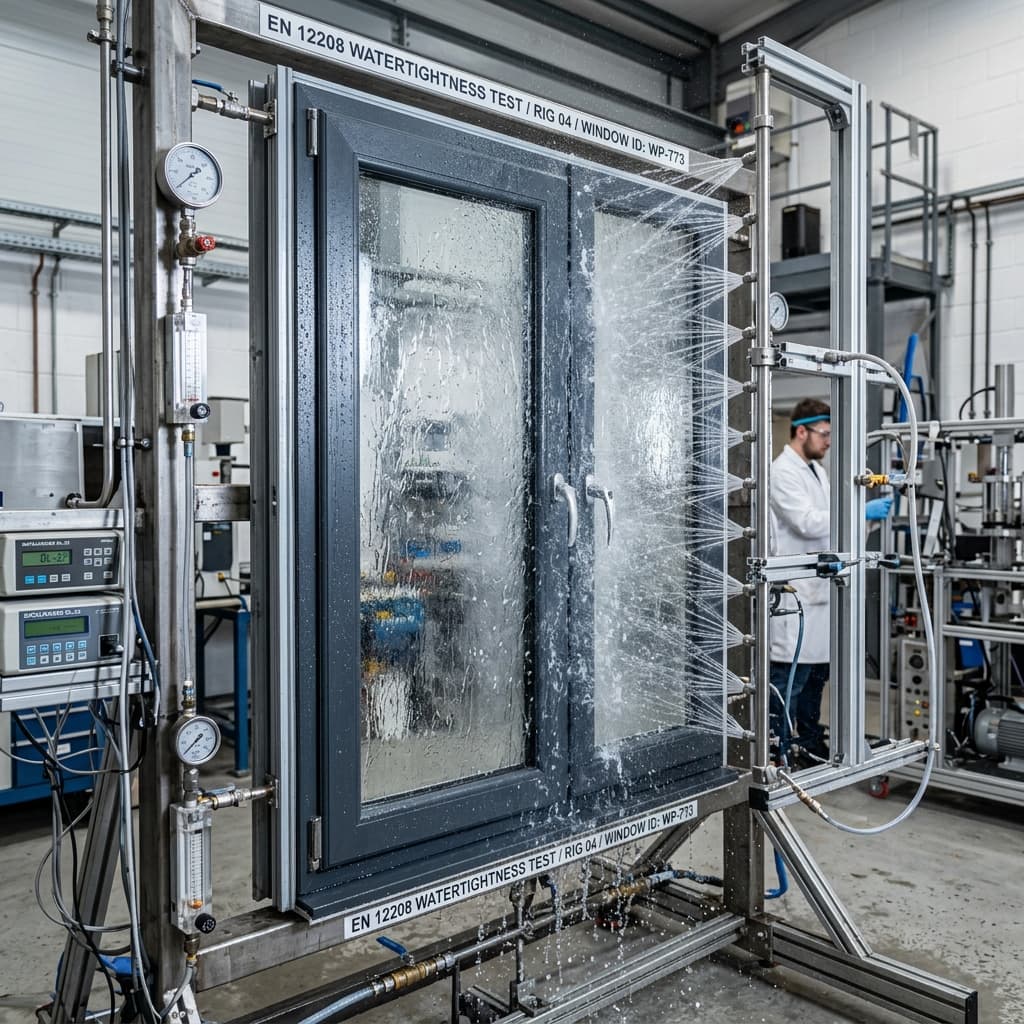
To determine how well a window handles monsoon weather, look beyond advertising terms like "100% waterproof" and request certified test ratings based on European Standards:
European Standard EN 12208 Watertightness Classification#
EN 12208 measures a window's ability to resist water penetration under continuous water spray and rising air pressure:
| EN 12208 Class | Test Pressure (Pascals) | Equivalent Wind Speed | Recommended Monsoon Application |
|---|---|---|---|
| Class 1A – 3A | 0 Pa – 100 Pa | 0 – 45 km/h | Low-rise sheltered courtyard windows |
| Class 4A – 6A | 150 Pa – 250 Pa | 55 – 70 km/h | Standard residential apartments |
| Class 7A – 9A | 300 Pa – 600 Pa | 80 – 115 km/h | High-rise flats & coastal monsoon zones |
| Class E750+ | > 750 Pa | > 125 km/h | Extreme storm & cyclone zones |
High-performance uPVC windows specified for high-rise apartments and coastal homes achieve Class 9A or Class E750 ratings.
What Causes Water Leaks in uPVC Windows?#
When a uPVC window leaks during a downpour, the cause is almost never a material failure. Common root causes include:
- Blocked Frame Weep Holes: Dust, construction debris, or dead insects clog the bottom weep slots, causing track water to overflow indoors. Refer to our uPVC Window Leak Repair Guide for step-by-step unblocking steps.
- Hardened or Shrunk Gaskets: Low-quality PVC gaskets harden under UV exposure, leaving gaps at sash corners.
- Cracked Outer Perimeter Silicone: Cheap exterior acrylic caulk breaks down, allowing water to bypass the frame into wall masonry.
- Poor Frame Alignment & Anchoring: An out-of-plumb frame prevents locking cams from pulling sashes tightly against weather gaskets.
- Low Track Lips on Sliding Windows: Low-profile sliding tracks flood under wind-driven rain if elevated monsoon tracks are missing.
uPVC vs. Aluminium Windows During Monsoon#
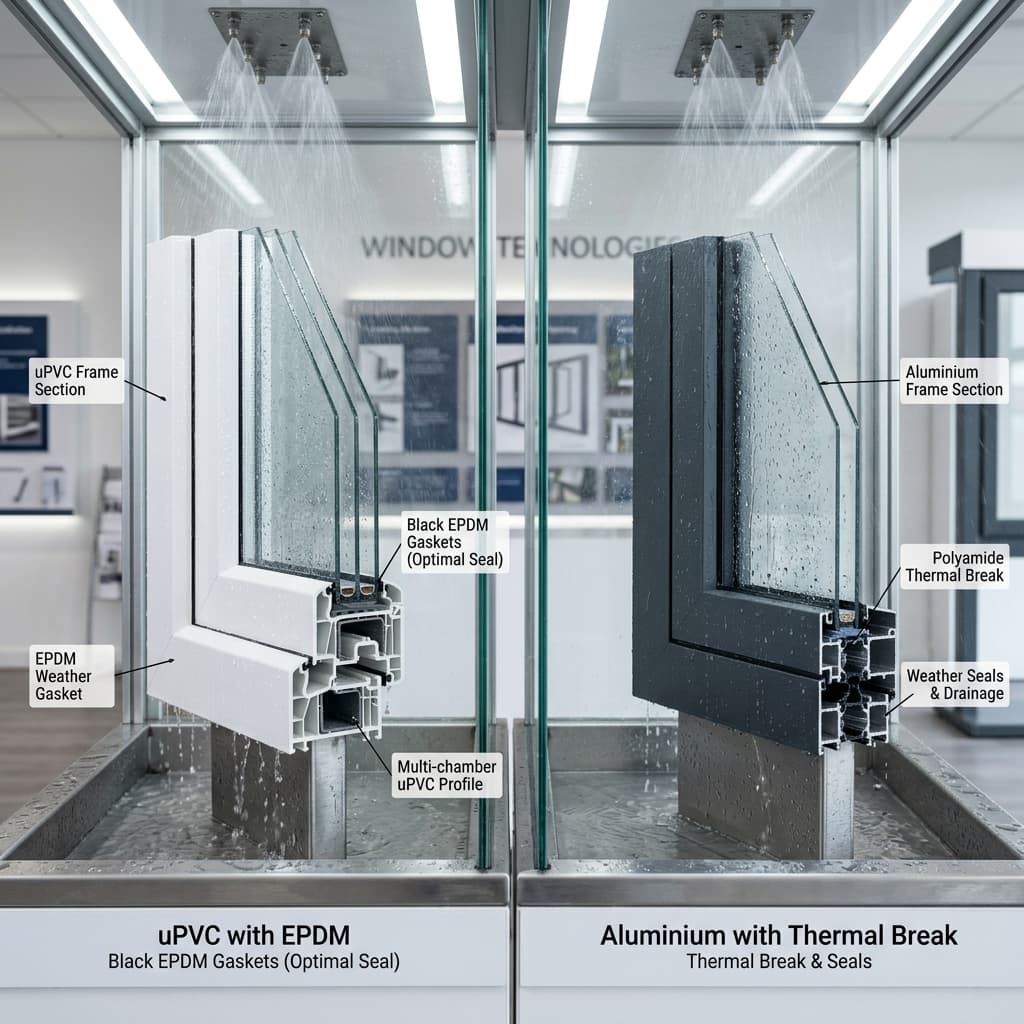
Both uPVC and system aluminum windows can perform exceptionally during monsoons when properly engineered. Key differences include:
| Performance Aspect | uPVC Window Systems | System Aluminium Windows |
|---|---|---|
| Corrosion Resistance | 100% Corrosion-Free (Polymer) | Requires Anodized / Powder Coated Finish |
| Corner Joint Sealing | Fusion-Welded Corners (100% Watertight) | Mechanical Cleats (Requires Internal Sealant) |
| Thermal Insulation | Naturally Insulating Multi-Chamber | Requires Polyamide Thermal Break Strips |
| Frame Maintenance | Minimal (Soap & Water Wipe) | Moderate (Prevent Scratches & Salt Oxidation) |
Pre-Monsoon Buyer's Checklist#
Before purchasing uPVC windows for rainy regions, ask your supplier these 8 critical technical questions:
- Are drainage weep holes sloped with non-return caps fitted?
- Are weather gaskets made of continuous EPDM rubber (not cheap PVC)?
- Are profile corners fusion-welded to create seamless watertight joints?
- Does the window system carry certified EN 12208 Class 9A or E750 ratings?
- Are outer frames reinforced with 1.5mm+ hot-dipped galvanized steel cores?
- Do sliding windows feature elevated monsoon tracks?
- Will external perimeter joints be sealed with weather-grade neutral silicone?
- Does the manufacturer offer a 10-year warranty covering frame and seals?
Frequently Asked Questions (FAQs)#
1. Are uPVC windows completely waterproof?#
No window can be called completely waterproof in every situation. However, high-quality uPVC windows with proper seals, drainage systems, hardware, and professional installation can provide strong protection against rainwater and moisture.
2. Do uPVC windows leak during heavy rain?#
Properly manufactured and installed uPVC windows are designed to resist rainwater. Leakage can still occur if drainage holes are blocked, seals are damaged, hardware is poor quality, or installation is incorrect.
3. Why are uPVC windows good for the monsoon season?#
uPVC does not absorb moisture like wood. It does not swell, rot, or warp because of rain and humidity. Combined with good weather seals and drainage, it can be a practical option for monsoon conditions.
4. How do uPVC windows prevent rainwater from entering?#
uPVC window systems use weather seals, tight locking systems, drainage channels, and properly designed frames to manage rainwater and reduce the possibility of water entering the home.
5. What should I do if my uPVC window leaks during rain?#
First, check the drainage holes for dirt or debris and inspect the rubber seals for damage. If the problem continues, have the window alignment, external sealing, and installation checked by a professional.
6. Are uPVC casement windows better for heavy rainfall?#
uPVC casement windows can provide a tight seal when closed because the sash presses against the frame. This can make them a suitable option for locations that experience heavy rainfall, provided the complete window system is properly designed and installed.
7. Are uPVC sliding windows suitable for the monsoon?#
Yes. Modern uPVC sliding windows can perform well during the monsoon when they have effective drainage channels, quality seals, suitable hardware, and professional installation.
8. Do uPVC windows get damaged by humidity?#
uPVC itself does not absorb moisture like wood. This makes it suitable for humid environments, although the seals, hardware, drainage system, and installation should also be maintained properly.
9. How often should uPVC windows be maintained during the monsoon?#
Basic maintenance before and during the monsoon is usually helpful. Clean the drainage holes and tracks, inspect the weather seals, remove dust and debris, and check that the windows close and lock properly.
10. Can blocked drainage holes cause window leakage?#
Yes. Drainage holes are designed to allow water collected within parts of the window system to flow outside. If they become blocked with dust or debris, water may accumulate and increase the risk of leakage.
11. Do uPVC windows require painting or polishing?#
No. Unlike many wooden window systems, uPVC windows generally do not require regular painting or polishing. Simple cleaning and periodic inspection of seals, drainage, and hardware are usually sufficient.
12. What should I check before buying uPVC windows for rainy areas?#
Look beyond appearance and price. Check the quality of the profile system, weather seals, drainage design, hardware, glass, reinforcement where required, installation quality, warranty, and after-sales service.
13. Are uPVC windows suitable for Indian monsoons?#
High-quality uPVC window systems can be suitable for Indian monsoon conditions because of their moisture resistance and low-maintenance properties. However, the overall performance depends on the complete window system and professional installation.
14. Is professional installation important for weather-resistant uPVC windows?#
Yes. Even a good-quality window may experience leakage if it is incorrectly installed. Proper alignment, sealing, anchoring, and connection between the window frame and wall are important for long-term weather performance.
Conclusion#
So, are uPVC windows truly waterproof?
While no window can be declared 100% leak-proof under every theoretical hurricane scenario, high-quality uPVC window systems engineered with fusion-welded corners, EN 12208 Class 9A watertightness ratings, EPDM compression seals, and professional installation offer the most reliable weather protection for Indian monsoons.
By choosing professionally engineered uPVC windows from Samani ECC, you keep monsoon downpours outside where they belong—ensuring a dry, comfortable, and beautiful home every rainy season.
Preparing your home for the next monsoon? Contact Samani ECC today for an expert weatherproofing consultation and customized quote.
Keywords

Abdus Salam
Expert Contributor
Expert in architectural aluminium systems and uPVC fenestration with over 20 years of experience in the Indian construction industry.
Related Articles

Technical Guide
Multi-Chamber uPVC Windows – What Are They and Why Do They Matter? (2026 Guide)
Discover how multi-chamber uPVC windows improve thermal insulation, reduce urban noise, enhance structural strength, and lower AC energy bills in Indian homes.
Buyer's Guide
Monsoon-Proofing Your Mumbai Home — uPVC Windows, uPVC Doors and What Actually Works
Prepare your Mumbai home for heavy rains, high winds, and moisture. Learn why weather-resistant uPVC windows and doors offer the ultimate waterproofing solution.

Technical Guide
Noise Reduction uPVC Windows – The Ultimate Guide for Indian Homes (2026)
Learn how noise reduction uPVC windows block traffic, construction, and city noise in Indian homes. Compare acoustic glass types, STC ratings, and soundproof window styles.
Ready to Transform Your Space?
Get a free, no-obligation technical consultation and personalized quote for your premium aluminium window and door requirements. Our experts are ready to bring your vision to life.
