uPVC Windows for Coastal Homes – Salt Air, Corrosion & What Actually Works (2026 Guide)

Abdus Salam
Expert Contributor
Category: Buyer's Guide | Read Time: 10 min | Updated: August 2026
Introduction#
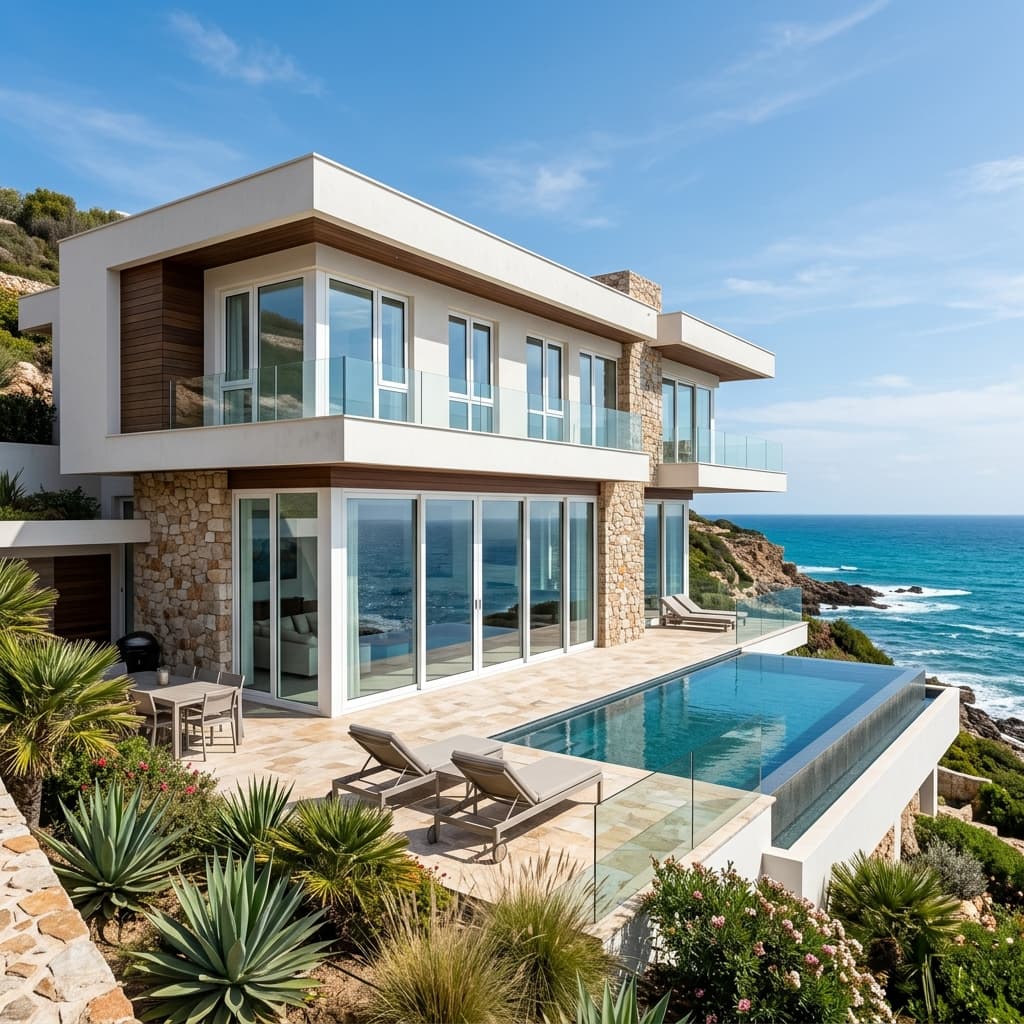
Living in a coastal home—whether in Mumbai, Alibaug, Goa, Chennai, Kochi, or Vizag—offers breathtaking sea views, cool ocean breezes, and unmatched natural ambiance. However, the same coastal environment that makes seaside living so appealing presents severe challenges for your home's windows and doors.
Salt-laden air, relentless atmospheric humidity, intense solar UV radiation, and gale-force monsoon winds degrade traditional window materials rapidly. Timber frames absorb airborne moisture, swelling, warping, and rotting over time. Steel and low-grade metal windows develop rust, pitted corrosion, and mechanical seizure within just a few years.
This is why homeowners, architects, and builders across India's coastline specify high-performance uPVC windows for oceanfront properties. Engineered from unplasticized polyvinyl chloride, uPVC is inherently immune to salt corrosion, moisture absorption, and electrochemical rust.
This guide explains why coastal weather destroys conventional windows, what hardware and profile specifications actually work near the ocean, how to select the right window styles, and how to maintain seaside fenestration for decades of trouble-free living.
Why Coastal Environments Destroy Ordinary Windows#
Unlike inland locations, coastal properties face aggressive atmospheric elements 365 days a year:
1. Airborne Salt Spray Corrosion#
Microscopic sodium chloride (salt) particles carried by ocean mist settle on window frames, hinges, handles, and rollers every day. Salt accelerates oxidation, causing standard steel or iron components to rust rapidly and flake apart.
2. Relentless Atmospheric Moisture & Humidity#
Humidity in coastal regions routinely exceeds 80% to 90%. Timber windows absorb this moisture, causing sashes to swell, jam against outer frames, peel exterior paint, and foster fungal rot.
3. Gale-Force Wind Pressures#
Coastal storms generate intense wind pressures against wall openings. Weak or unreinforced window frames flex under pressure, breaking perimeter weather seals and allowing rainwater infiltration into living areas.
4. Solar UV Degradation#
Intense coastal sunlight combined with water reflection subjects window frames to severe UV radiation, which causes low-grade plastics to turn yellow, chalk, or become brittle.
Material Performance Comparison in Coastal Regions#
| Window Material | Salt Air Corrosion | Moisture Absorption | Maintenance Requirement | Expected Coastal Lifespan |
|---|---|---|---|---|
| Traditional Timber / Wood | Vulnerable to Rot | High (Swells & Warps) | Very High (Annual Sanding & Varnish) | 5 – 10 Years |
| Mild Steel / Iron | Severe Rusting & Pitting | Low | High (Frequent Scraping & Anti-Rust Paint) | 3 – 7 Years |
| Standard Aluminium | Pitting Corrosion in Salt Air | Zero | Moderate (Requires Anodized/PVDF Coating) | 10 – 15 Years |
| Premium uPVC Profiles | 100% Salt Immune (Zero Rust) | Zero (Non-Porous) | Very Low (Simple Soap & Water Wipe) | 30+ Years |
Why uPVC Windows Excel in Coastal Climates#
1. 100% Chemical & Salt Corrosion Immunity#
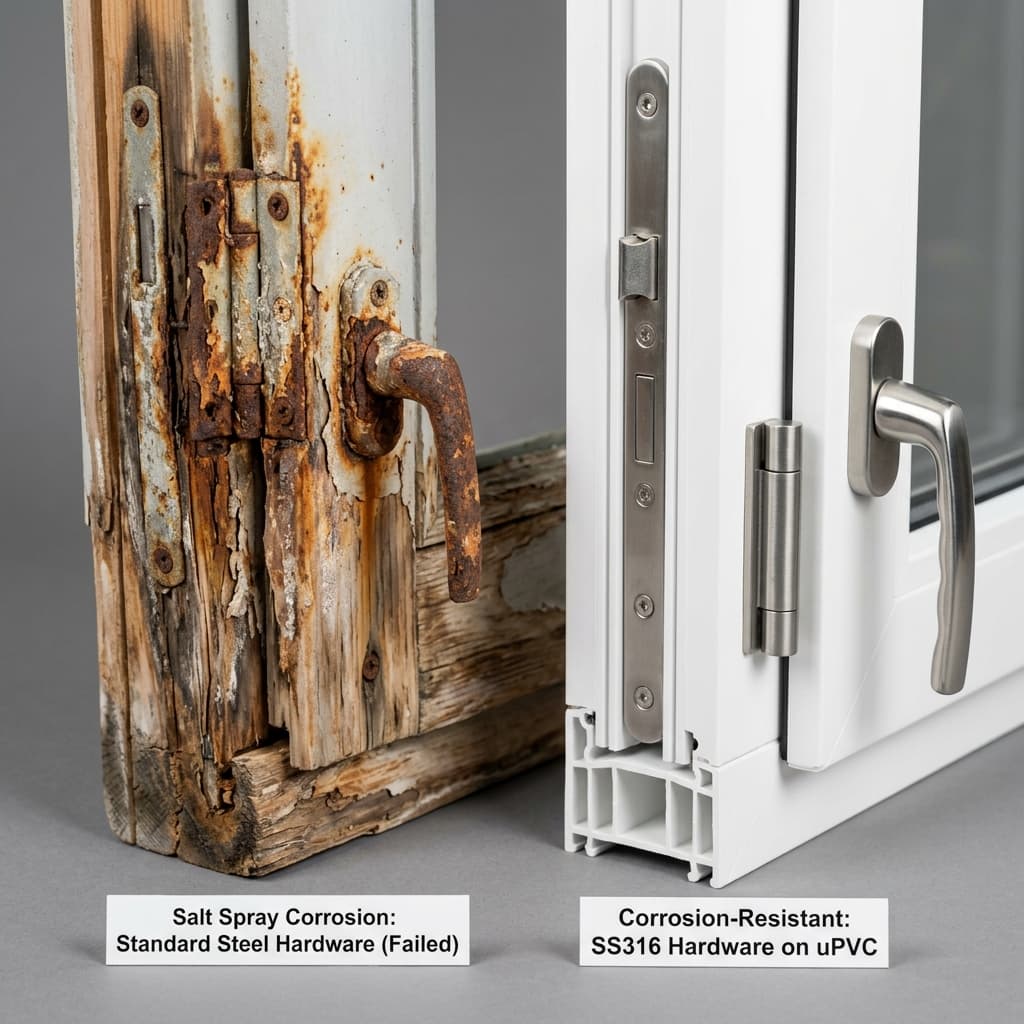
uPVC is a non-metallic polymer material. It does not react with sodium chloride, airborne saline fog, or acid rain. Even when installed directly on a beachfront wall, uPVC frames will never rust, pit, or corrode.
2. Zero Water & Humidity Absorption#
The non-porous structure of uPVC prevents water ingress. Sashes retain their precise factory dimensions year-round without swelling, binding, or distorting, ensuring effortless sliding and latching during monsoons.
3. High Titanium Dioxide (TiO2) Formulation#
High-grade uPVC window profiles intended for Indian coastal regions contain 8% to 10% Titanium Dioxide. This UV stabilizer prevents surface chalking, discoloration, or embrittlement under harsh seaside tropical sun.
4. Excellent Thermal & Sound Insulation#
Seaside properties often face bright western sunlight and loud wave/wind noise. Multi-chambered uPVC frames paired with double-glazed insulated glass (DGU) reduce indoor heat gain and dampen coastal storm noise.
What Actually Works? Key Features for Coastal Windows#
Simply buying a window labeled "uPVC" is not enough for an oceanfront property. To withstand coastal conditions long-term, ensure your window system incorporates these essential technical features:
Feature #1: Marine-Grade Stainless Steel (SS316) Hardware#
While uPVC frames cannot rust, metallic hardware components—hinges, handles, friction stays, rollers, and multi-point locking rods—can.
- Standard Hardware (Grade 202/304): Will develop surface rust stains in salt air within 12 to 24 months.
- Marine-Grade Stainless Steel (SS316): Contains molybdenum for maximum resistance to chloride pitting corrosion. Always insist on SS316 grade hardware for coastal installations.
Feature #2: Internal Galvanized Steel Core Reinforcement#
Coastal high-rise apartments and beach villas experience extreme wind loads. High-quality uPVC sashes contain 1.5mm to 2.0mm hot-dipped galvanized steel box section cores inside the profile chambers, preventing frame flexing during gale-force storms.
Feature #3: Dual EPDM Weather Gaskets#
Continuous Ethylene Propylene Diene Monomer (EPDM) synthetic rubber seals retain their elasticity under salt and heat exposure, maintaining an airtight barrier against wind-driven rain.
Choosing the Best Window Styles for Seaside Homes#
1. uPVC Sliding Windows & Doors (Best for Panoramic Sea Views)#
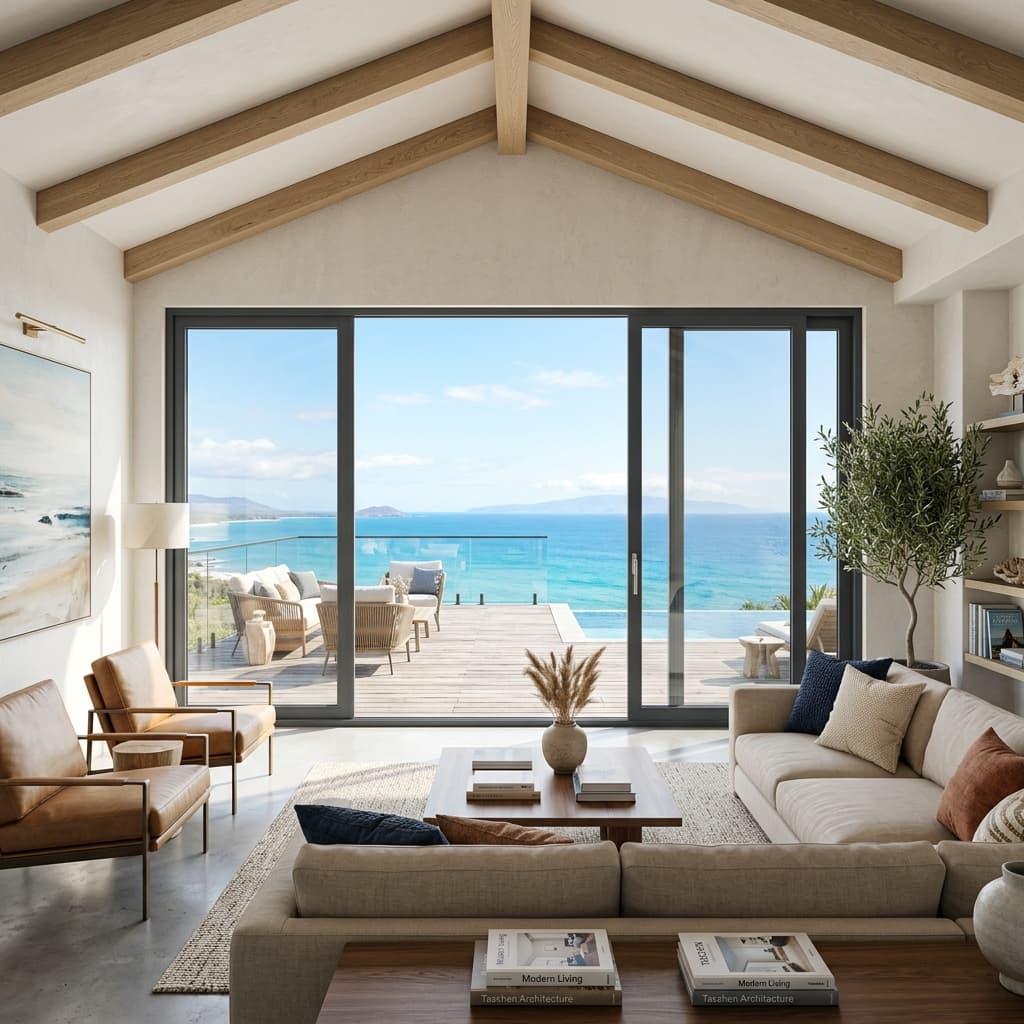
uPVC sliding windows and uPVC sliding balcony doors feature large glass panes that maximize ocean vistas and daylight.
- Coastal Advantages: Multi-track designs allow wide openings to capture sea breezes. When equipped with heavy-duty brass/SS316 rollers and raised monsoon tracks, they prevent track water overflow.
- Best For: Balconies, living rooms, and oceanfront verandas.
2. uPVC Casement Windows (Best for High Wind & Rain Sealing)#
uPVC casement windows feature sashes that latch tightly into outer frames using multi-point locking gear.
- Coastal Advantages: When strong sea winds blow against an outward-opening casement sash, the wind pressure actually pushes the sash tighter against the frame gaskets, creating an airtight and watertight seal.
- Best For: Bedrooms, high-rise coastal apartments, and wind-exposed facades.
Glass Selection for Coastal Properties#
To optimize comfort and safety in seaside homes, match your uPVC frames with specialized glass units:
- Toughened Safety Glass: Essential for large balcony doors and high-rise windows to resist heavy wind pressure and storm impacts.
- Tinted Solar Control Glass: Reduces intense sun glare reflected off ocean waters, keeping room interiors cool.
- Laminated Acoustic Glass: Ideal for bedrooms, blocking high-velocity wind whistling and ocean storm noise.
Simple Maintenance Tips for Seaside uPVC Windows#
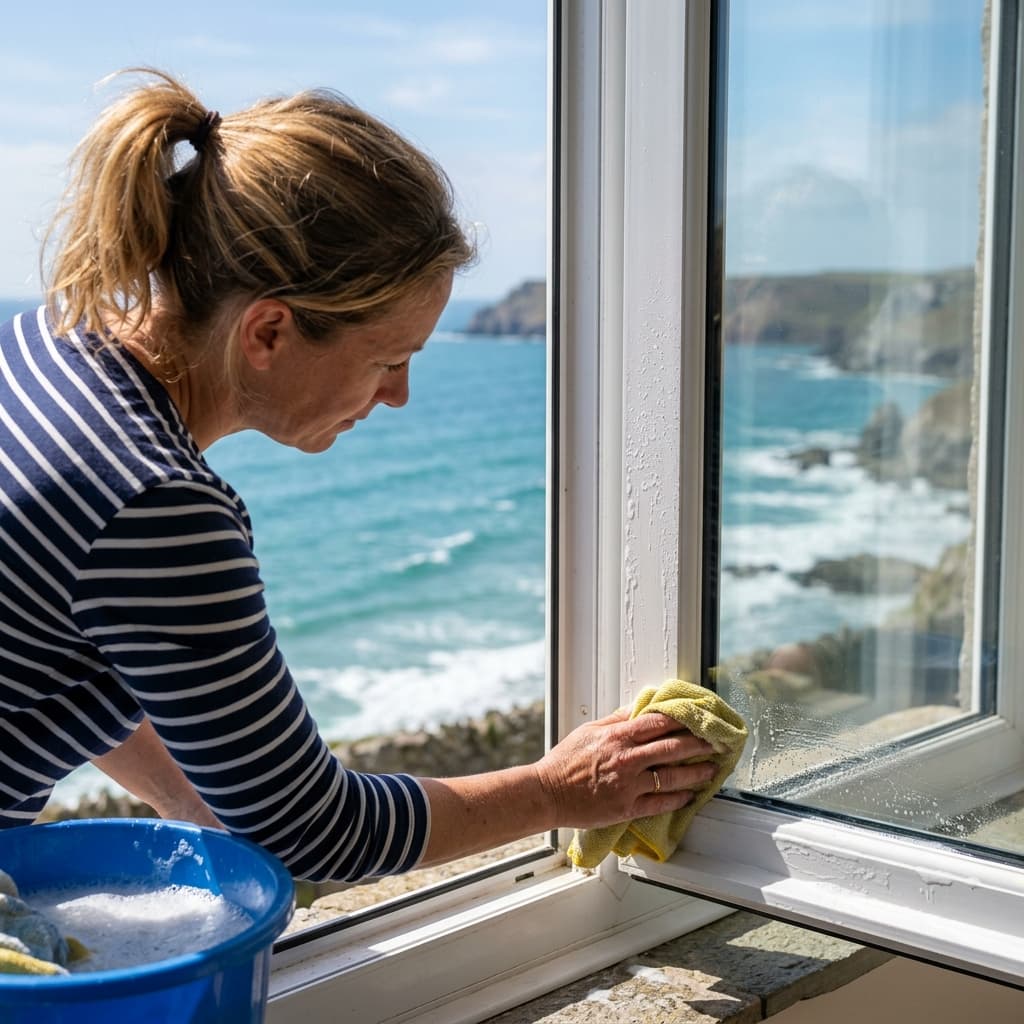
While uPVC is virtually maintenance-free compared to wood or steel, simple care preserves hardware performance:
- Rinse Away Salt Deposits: Spray frame exteriors and glass with fresh water every few weeks to wash off accumulated ocean salt crust.
- Wipe Profiles with Mild Soap: Clean frame surfaces using a soft cloth dipped in warm soapy water. Avoid harsh abrasive pads.
- Keep Tracks Free of Sand: Vacuum coastal beach sand out of sliding tracks to prevent roller wear.
- Lubricate Moving Hardware: Apply anti-corrosive silicone lubricant spray to SS316 hinges, rollers, and lock mechanisms twice a year.
Frequently Asked Questions (FAQs)#
1. Are uPVC windows good for coastal homes?#
Yes, high-quality uPVC windows can be a good choice for coastal homes because uPVC frames do not rust or corrode like steel. They are also resistant to moisture and do not absorb water like wood.
2. Does salt air damage uPVC windows?#
Salt air generally does not cause rust or corrosion to the uPVC frame itself. However, salt deposits can affect metal hardware over time. Regular cleaning and corrosion-resistant hardware are important for coastal homes.
3. What type of window hardware is best for coastal areas?#
Corrosion-resistant hardware is important for coastal properties. Hinges, handles, rollers, screws, and locking components should be suitable for humid and salt-air environments.
4. Do uPVC windows rust near the sea?#
No, the uPVC frame itself does not rust because it is not made of metal. However, metal components such as hinges, screws, locks, and rollers may corrode if they are not designed for coastal conditions.
5. Can uPVC windows handle high humidity?#
Yes, quality uPVC profiles are moisture-resistant and do not absorb water like traditional wooden frames. This makes them suitable for humid coastal environments.
6. Are uPVC windows suitable for heavy rain and coastal storms?#
Properly designed and professionally installed uPVC windows can provide good protection against rain and wind. Weather seals, drainage channels, suitable hardware, and correct installation are all important for coastal performance.
7. Which uPVC window style is best for coastal homes?#
The right style depends on the home and location. uPVC casement windows can provide a tight closing seal, while sliding windows are useful for space-saving applications and balconies. The window should be selected based on wind exposure, ventilation requirements, and available space.
8. What glass is best for coastal homes?#
The best glass depends on your requirements. Toughened or laminated glass may be considered where additional safety is required, while double glazing can help improve thermal and acoustic performance.
9. How often should uPVC windows be cleaned in coastal areas?#
Coastal homes should clean their window frames and hardware regularly to remove salt, dust, and sand deposits. The exact frequency depends on how close the property is to the sea and how much salt exposure it receives.
10. Do uPVC windows require maintenance in coastal areas?#
uPVC windows are generally low-maintenance, but coastal conditions still require regular care. Cleaning salt deposits, checking seals, clearing drainage holes, and inspecting hardware can help maintain smooth operation.
Conclusion#
Building or renovating a seaside home should be a rewarding experience—not an ongoing battle against rust, swollen frames, and water leaks.
By choosing engineered uPVC sliding and casement window systems with marine-grade SS316 hardware and professional installation from Samani ECC, you ensure a stunning, quiet, and 100% corrosion-free oceanfront home for decades to come.
Ready to install coastal-tested uPVC windows for your beach home or seaside apartment? Contact Samani ECC today for expert guidance, customization options, and free site estimates.
Keywords

Abdus Salam
Expert Contributor
Expert in architectural aluminium systems and uPVC fenestration with over 20 years of experience in the Indian construction industry.
Related Articles
Buyer's Guide
Monsoon-Proofing Your Mumbai Home — uPVC Windows, uPVC Doors and What Actually Works
Prepare your Mumbai home for heavy rains, high winds, and moisture. Learn why weather-resistant uPVC windows and doors offer the ultimate waterproofing solution.
Buyer's Guide
uPVC Windows: What Nobody Tells You Before You Buy in India (2026 Guide)
Uncover the hidden truths about buying uPVC windows in India. Learn why price per sq ft can be misleading, how to evaluate profile standards (IS 17953:2023), glass, hardware, and installation.
Buyer's Guide
uPVC Windows for Flats in High-Rise Buildings – Everything You Need to Know (2026 Guide)
Discover why uPVC windows are essential for high-rise apartments in India. Learn about wind resistance, multi-point locking, acoustic insulation, and window types for high-rise flats.
Ready to Transform Your Space?
Get a free, no-obligation technical consultation and personalized quote for your premium aluminium window and door requirements. Our experts are ready to bring your vision to life.
