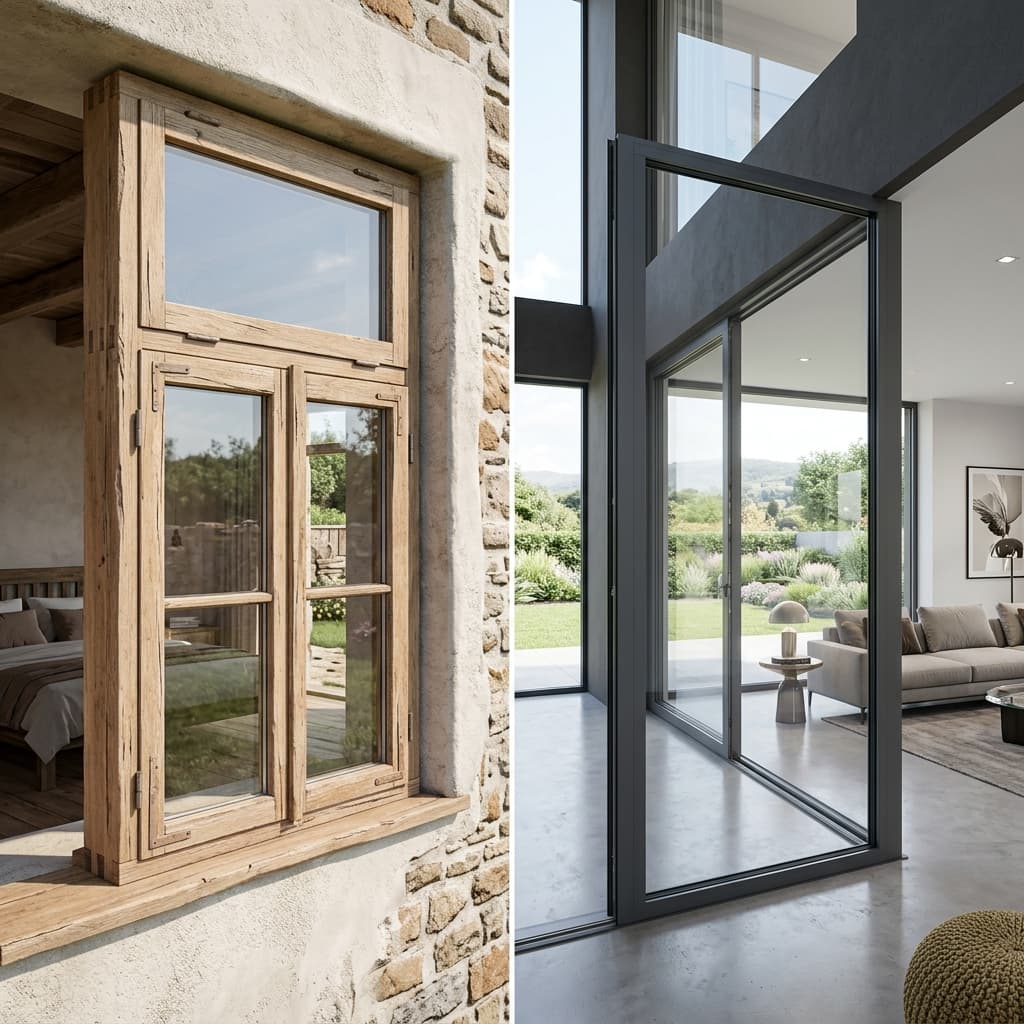
System Windows vs Traditional Aluminium Windows: Which Is Better for Modern Homes?

Abdus Salam
Expert Contributor
Category: Buyer's Guide | Read Time: 8 min | Updated: June 2026
Choosing the right window system can dramatically affect your home’s comfort, energy use, and value. While traditional aluminium windows (often built by local fabricators) have been used for decades, modern system windows are engineered as complete, tested solutions.
In this guide, we – as system-windows experts at Samani ECC – explain the differences and why most contemporary projects favor system windows. We’ll cover technical standards, performance data, and buying tips, so you can make an informed choice for your home or building.
What Are Traditional Aluminium Windows?#
Traditional aluminium windows are typically site-fabricated from standard aluminium sections, using hardware and glass from various suppliers. In practice:
- Locally made: Profiles and parts are often bought from stock and assembled by workshops on-site.
- Inconsistent quality: Performance depends on the fabricator’s skill, assembly, and the materials chosen.
- Limited testing: Such windows are rarely tested as a whole system against standardized performance criteria.
- Simple design: They usually have fewer seals, basic locking hardware, and thicker frames compared to high-end systems.
Because components are pieced together, a traditional window’s airtightness, water resistance, insulation, and durability can vary widely. In humid or monsoon climates (e.g., coastal or high-rainfall regions like Mumbai, Thane, and Pune), these variations often lead to issues like leaks, noise, or heat gain. For residents facing heavy rains, upgrading to weather-proof systems can be game-changing (see our detailed guide on Monsoon-Proofing Your Mumbai Home for actionable advice).
What Are System Windows?#
System windows (also called engineered or integrated windows) are pre-designed and factory-tested window assemblies. Every element is engineered to work together:
- Precision profiles: High-quality aluminium profiles (often with thermal breaks) are extruded to tight tolerances.
- Integrated seals: Multi-layer gaskets and weatherstrips are built into the profiles for superior airtightness and watertightness.
- Tested hardware: Hinges, locks, and handles are specified and tested as part of the system (not generic aftermarket parts).
- Thermal breaks: Premium systems include non-conductive barriers within the frame to greatly reduce heat transfer.
- Certified assembly: Complete window units (frame + sash + glass) are tested according to standards before sale.
In other words, a system window is sold and installed as a complete solution. International and European standards like EN 12207 (air permeability) and EN 12208 (water tightness) are used to rate them. For example, a top-rated system window will pass Class 4 air-tightness (tested up to 600 Pa pressure) and Class 9 water-tightness (withstand 600 Pa water spray). As the ALCOI industry report notes, “system windows are factory-designed, precision-engineered, and tested for wind, water, and air resistance”, whereas normal windows lack such standardized testing.
Key Differences: Performance, Durability, and Comfort#
1. Engineering & Integration#
- Traditional: Parts and profiles are mixed-and-matched. Performance relies on assembly skill. There’s little guarantee the pieces fit perfectly or last long.
- System: Every profile, gasket, and component is designed as a unit. Manufacturers test complete assemblies for structural strength and seal integrity.
Expert Insight: Well-engineered system windows ensure better strength, tighter seals, smoother operation, and a longer lifespan. In contrast, a conventionally built window might sag or leak over time, even if it looked fine initially. Check out our Complete Guide to System Windows to understand the technical parameters in detail.
2. Air Infiltration#
- Traditional: Often have visible gaps and single-channel seals. Even small misalignments let drafts in.
- System: Use multi-layer seals (EPDM or neoprene gaskets) on all moving parts. They aim for minimal leakage.
According to EN 12207 (European standard), windows are rated from Class 0 (worst) to Class 4 (best). A Class 4 window admits very little air even under 600 Pa (about 6 millibar) of pressure. Top system windows achieve Class 3–4, meaning virtually no drafts in normal conditions. This high airtightness is crucial for comfort (no cold drafts or dust intrusion) and for energy savings (your AC won’t have to work as hard).
3. Water Resistance#
- Traditional: Typically rely on silicone sealant and simple channels, which degrade or flood in heavy rain. Over time, seals crack and windows leak during storms.
- System: Incorporate engineered drainage and pressure-equalization. Water that gets past the outer seal is routed away internally.
Per EN 12208, water tightness is rated Class 0 to 9, with Class 9 windows resisting water spray at 600 Pa for 55 minutes. Premium system windows approach this level, using features like multi-level rain deflection rails and controlled drains. In practice, a quality system window (especially for rainy climates) will stay bone-dry inside even during heavy downpours.
4. Sound Insulation#
- Traditional: Often fitted with single-pane or basic double-glazing and minimal sealing. They may only provide ~20–25 dB noise reduction.
- System: Support high-performance glazing options (e.g., thick double/triple panes or acoustic laminated glass) and superior seals on frames.
Windows are rated by an Rw (sound reduction) value. As a rule of thumb, an Rw ~35 dB is good for normal homes, while 45–50 dB is ideal for busy urban locations (near highways or airports in cities like Delhi and Bengaluru). Modern system windows with acoustic glass and multi-point seals regularly achieve Rw in the mid-40s dB range. For example, some uPVC windows and aluminium systems advertise up to 47 dB noise insulation. This means street noise is dramatically quieter indoors, improving sleep and comfort.
5. Energy Efficiency#
- Traditional: Standard aluminium frames are highly conductive – heat and cold easily flow through the frame metal. Single-pane glass (common in budget windows) also leaks heat.
- System: Feature thermal breaks and double/triple glazing. A thermal break is a non-metallic spacer in the frame that cuts the heat bridge.
Thermal breaks halve the frame’s U-value (heat transfer rate) compared to a solid aluminium frame. Whereas a plain aluminium window might have a U-value of 2.0 W/m²K or higher, a thermally-broken system window can drop near 1.0 W/m²K (with double glazing). Lower U-values mean much less heat enters in summer (or escapes in winter).
As a result, system windows keep interiors more stable and can cut cooling/heating energy by 20–40% in many climates. In hot Indian cities, quality system windows are often required to meet building energy codes. Well-designed units have performance tested against standards like IS 875 for wind and ASTM E283 for air infiltration. Refer to our Why Aluminium Costs More in 2026 guide for details on raw material impacts and thermal efficiency.
6. Security#
- Traditional: Usually use basic latch locks and standard hardware. They lack reinforcement, so frames can be pried or lifted off tracks.
- System: Employ multi-point locking (locks at several spots along the sash), reinforced profiles, and options like laminated security glass. Anti-lift devices and high-strength hinges are common.
Multi-point locks spread any force over the entire window perimeter, so it’s far harder to pry open. Laminated glass (an inner polyvinyl layer) can hold even if broken. Overall, premium system windows are built to meet advanced security classes (analogous to British EN 1627 or European RC2/RC3 ratings), whereas normal windows typically only meet the weakest class.
7. Durability & Maintenance#
- Traditional: Over years, the silicone seals may fail, hardware loosens, and colour/fading may occur (especially in coastal salt air). Repairs can involve re-siliconing or replacing parts.
- System: Use high-quality powder-coated or anodized finishes and durable hardware designed to last 20–25+ years. Seals are weather-rated EPDM and tested for longevity.
Because all components are specified together, system windows need far less tinkering. You won’t often have to shim frames or replace handles prematurely. Samani’s own experience (and industry data) shows system windows typically maintain their performance and appearance significantly longer than basic windows. In fact, factory certification often includes “durability” cycles (opening/closing tens of thousands of times). In the long term, this reliability means lower lifetime costs, even if the upfront price is higher.
8. Aesthetics#
- Traditional: Thicker frames, bigger mullions, and sometimes visible screws. Designs are simpler.
- System: Slimmer profiles and hidden hardware give a clean look. Manufacturers offer consistent finishes, large spans, and customizable colors or wood-look options.
For modern architecture, large glass-to-frame ratios are popular. System windows enable floor-to-ceiling glass and narrow profiles without compromising strength. They also allow uniform frame widths and finer details that homebuyers and architects expect today.
Testing Standards: Why They Matter#
System windows aren’t just buzzwords – they’re backed by standards and lab tests. Key standards include:
- EN 12207/1026 – Air Permeability. Ensures airtightness. Top class (4) at 600 Pa.
- EN 12208/1027 – Watertightness. Ensures no leaks. Top class (9) holds 600 Pa water spray for 55+ minutes.
- EN 12210/13115 – Wind Load. Measures deflection and breakage under high wind pressure.
- EN ISO 10077 – Thermal Transmittance. Calculates U-value of frame and glass combined.
- EN 14019 – Operational Force. Checks ease of opening/closing after durability cycles.
- UNI 11296 (Italy) or similar – Acoustics. Rw sound rating from standardized tests.
By comparison, a traditional window assembled on site typically has no formal certification. Samani ECC’s position is: “Generic windows fail when exposed to extreme conditions, while engineered system windows maintain performance.”
In practice, this means you can see and feel the difference: less noise, no drafts, no leaks, and smoother operation. Several industry reports confirm that frame systems tested to these standards consistently outperform ad-hoc assemblies.
Performance Comparison (Summary)#
| Feature | Traditional Aluminum Window | System Window |
|---|---|---|
| Initial Cost | Lower (basic profiles, hardware) | Higher (engineered design, testing) |
| Air Tightness | Moderate (often untested, common gaps) | High (multi-gasket, Class 3–4 tested) |
| Water Tightness | Moderate (silicone+capillary action) | Very High (engineered drains, Class 7–9) |
| Sound Reduction (Rw) | ~25–30 dB with single/double glazing | ~35–50+ dB with acoustic glazing (double/triple pane) |
| Thermal Insulation | Basic (aluminium conducts heat) | High (thermal breaks, double/triple glazing) |
| Security | Basic locks, standard hardware | Multi-point locks, reinforced profile, laminated glass |
| Durability | Good (aluminium resists rust) | Excellent (tested seals/hardware) |
| Maintenance | Moderate (may need re-sealing, adjustments) | Low (quality finishes, durable hardware) |
| Aesthetics | Thick frames, fewer finishes | Slim profiles, uniform finish, modern styles |
| Long-Term Value | Moderate – may need updates sooner | High – consistent performance over decades |
Costs and ROI#
It’s true system windows cost more upfront (often 20–50% extra) because of the engineering, quality materials, and testing involved. However, consider the lifetime:
- Energy Savings: Better seals and insulation reduce cooling/heating bills each year.
- Fewer Repairs: You’re unlikely to pay for re-glazing, re-caulking, or frame fixes after a few years.
- Comfort & Satisfaction: No complaints of drafty rooms, water leaks, or traffic noise – important for high-end homes or sensitive projects.
- Property Value: Energy-efficient, soundproof, secure windows can be a selling point and may add value to the home.
In our experience, many clients find that after about 5–10 years, the cumulative savings and avoided headaches offset the higher initial cost. As the industry report notes, “system windows offer better long-term performance because their seals, joints, and thermal breaks are designed for durability”. For most modern homes, that makes system windows worth the investment. Refer to our Aluminium vs uPVC Windows Comparison Guide for more details.
Who Should Choose System Windows?#
- Discerning Homeowners: If you want the best comfort, energy efficiency, and minimal maintenance in your villa, apartment, or smart home, system windows are ideal.
- Urban Projects: Near highways, airports, or busy streets, system windows’ acoustic benefits (45–50 dB Rw) greatly improve quality of life.
- High-Rise / High-Wind Areas: Certified wind-load performance means they’re safer and more reliable in storms or on taller buildings.
- Premium Commercial & Hospitality: Hotels, hospitals, or offices needing tight performance, consistent quality, and good warranties favor system windows.
- Green Building / Energy Codes: Projects aiming for certifications (e.g., IGBC, GRIHA, LEED) often require high-performance fenestration. System windows make compliance easier.
In short: wherever performance and longevity matter more than cutting corners, go with a system window.
When Traditional Windows Might Suffice#
- Strict Budgets: If upfront cost is the only concern (e.g., a simple warehouse or temporary structure), a basic aluminium window might do.
- Small, Shaded Spaces: For a minor renovation (like a small bathroom window in a shaded area), the benefits of a full system may not justify the expense.
- DIY Projects: Traditional windows can sometimes be installed by non-specialists, whereas system windows often require certified installers.
However, even budget projects should ensure some basic quality: use thicker 2-3mm frames, consider decent glass, and insist on good sealing. Often a mid-range system window can be found that balances cost and performance.
Buying Guide: What to Look For#
If you decide on system windows, here are some tips to pick the right one:
- Ask for test certificates: Ensure the system is certified to EN/AAMA/NFRC standards (or Indian equivalents). Check ratings for air (prefer Class 3–4), water (Class 6+), and wind.
- Profile thickness & thermal break: Premium systems use ≥1.4–1.6 mm aluminium with stainless or polyamide thermal breaks. This boosts strength and insulation.
- Glazing options: Double-glazed Low-E glass should be standard; consider triple-glazing or acoustic laminated units if sound is critical.
- Hardware brand: Look for reputed locking and hinge brands (like Roto, Siegenia, or local high-grade options) tested for multi-point locking and long cycles.
- Local climate suitability: For coastal cities, insist on marine-grade powder coating (≥60 μm thickness) and stainless steel fittings. In heavy-rain zones, confirm water class and drainage design.
- Support & warranty: Good suppliers (like us at Samani ECC) offer warranties on hardware and seals. Also check availability of spare parts locally.
- Aesthetics & customization: If you need a special color, wood-look finish, or slimline design, make sure the system offers it.
Final Verdict: System Windows Lead (Long-Term)#
In summary, system windows outperform traditional aluminium windows on almost every count that matters to homeowners: airtightness, insulation, noise reduction, security, and durability. They do cost more initially, but they pay back through comfort, savings, and peace of mind. As Indian architect Noor said (paraphrased): “A poorly fabricated window will lose to a well-engineered one every time.”
In modern homes where energy codes, occupant comfort, and asset value are key, system windows are rapidly becoming the default choice.
Ready to Upgrade Your Spaces?#
Whether you are building a modern home, a luxury villa, or a high-rise apartment, Samani ECC offers premium aluminium and glass solutions tailored for modern architecture.
Contact Us Today For:
- Expert Consultation
- Customized Designs
- Project-Based Solutions
- Professional Installation Support
Keywords

Abdus Salam
Expert Contributor
Expert in architectural aluminium systems and uPVC fenestration with over 20 years of experience in the Indian construction industry.
Related Articles
Buyer's Guide
Aluminium vs uPVC Windows — Which Is Better for Indian Homes in 2026?
A comprehensive 2026 guide comparing Aluminium and uPVC windows for Indian homes. Discover which is better for strength, thermal insulation, aesthetics, and cost to make the right choice for your next project.
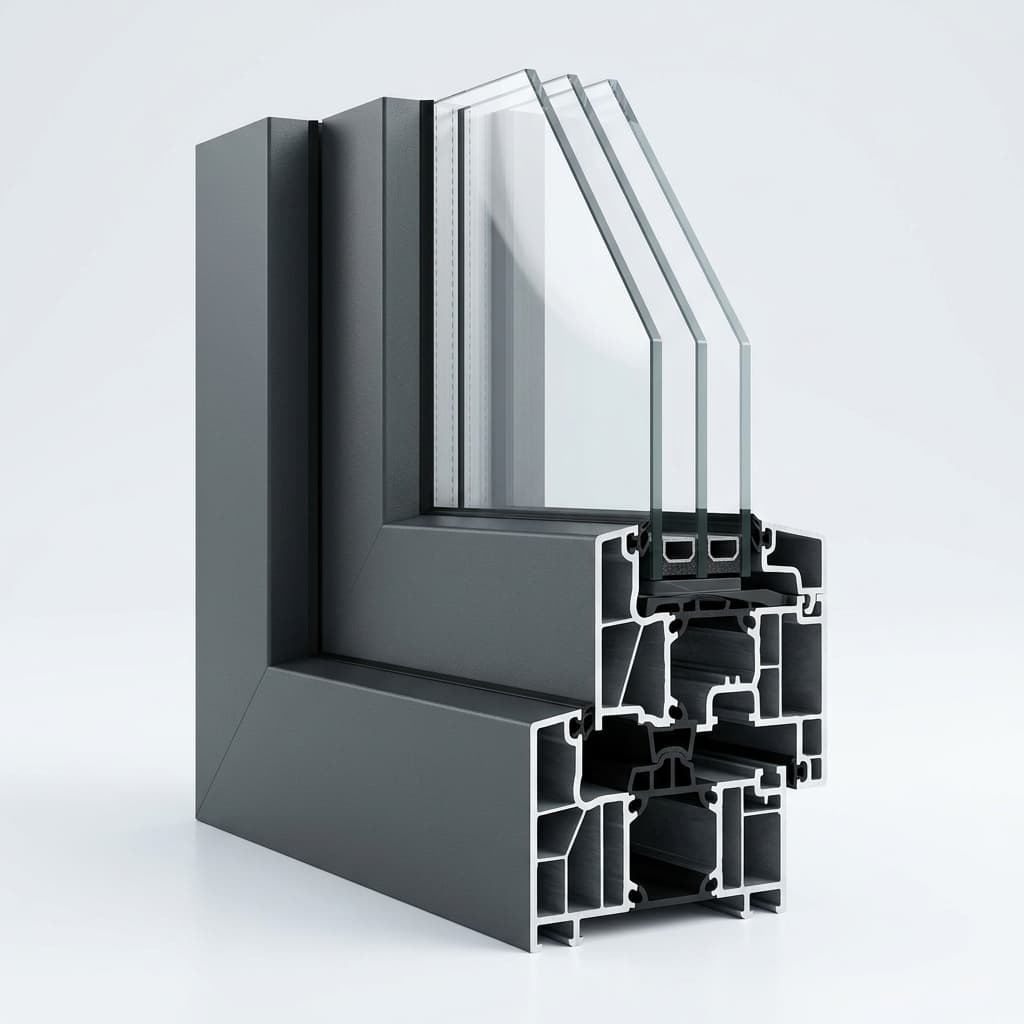
Buyer's Guide
Complete Guide to System Windows: Standards, Performance, and Buying Advice
Learn how high-performance system windows deliver superior energy savings, acoustics, and durability. An expert buyer's guide with standards, cost/ROI, and FAQs by Samani ECC.
Buyer's Guide
What is the difference between System Windows and Normal Windows
A detailed guide comparing system windows and normal windows. Learn about engineering, water leakage protection, sound insulation, durability, and aesthetics.
Ready to Transform Your Space?
Get a free, no-obligation technical consultation and personalized quote for your premium aluminium window and door requirements. Our experts are ready to bring your vision to life.
