
Why Aluminium Costs More in 2026 — And What To Do About It

Abdus Salam
Expert Contributor
Introduction#
Global aluminium prices have climbed to a 3-year high. This isn't speculation. LME aluminium — the global benchmark — closed near USD 2,800/tonne at the end of 2025, its highest since the 2022 Russia–Ukraine supply shock. In 2026, prices have pushed toward USD 3,000/tonne and are now trading above USD 3,500/tonne in some markets.
Those global moves hit Indian markets directly. Mumbai and Delhi NCR are both seeing P1020 ingot prices tracking LME and MCX gains in real time.
| City | Typical Ingot Price (Apr 2026) | Change |
|---|---|---|
| Mumbai | ₹3,79,000 per tonne (P1020 ingot) | ▲ +5.0% week-on-week |
| Delhi NCR | ₹3,78,000 per tonne (P1020 ingot) | ▲ +5.2% week-on-week |
5 Forces Driving the Price Surge#
No single event explains the rise. It's a convergence of structural, geopolitical, and regulatory forces — all compressing supply while demand accelerates.
1. Energy Is the Biggest Cost Driver#
Smelting aluminium consumes 13–15 MWh of electricity per tonne — more than almost any other industrial material. As global energy costs have risen, so has the floor price for every ingot produced.
- Stat: 13–15 MWh consumed per tonne of aluminium.
2. Geopolitics & Gulf Supply Disruption#
Middle East supply disruptions and US–Iran tensions pushed LME aluminium up by over 2% in a single session in 2026. Shipping disruptions and scrap competition in Asia have compounded the squeeze on available supply.
- Stat: LME stayed above $3,500/t amid Gulf disruptions in May 2026.
3. US Tariffs Redrew the Global Map#
The United States imposed 50% tariffs on aluminium, pushing North American prices above USD 5,200/tonne — nearly double LME prices. This diverted Canadian supply toward Europe, tightening inventory globally and lifting premiums everywhere.
- Stat: US price: $5,200+/t · vs LME: ~$2,800/t.
4. Demand Is Structurally Higher#
Transportation consumes 35% of global aluminium output; construction a further 25%. India's EV sector, airport modernization drive, and Smart Cities Mission are all driving sustained domestic demand — even as prices climb.
- Stat: India aluminium windows & doors CAGR: 5.3% (2024–2030).
5. EU's CBAM — Green Regulations Add Cost#
The EU's Carbon Border Adjustment Mechanism (CBAM) took effect in 2026. It could add up to 70% to the cost of imported primary aluminium into Europe, reshaping global trade flows and pushing low-carbon supply toward premium markets — away from Asia.
- Stat: CBAM could raise EU import cost by up to 70%.
Where Is All the Aluminium Going?#
Global aluminium demand is not slowing. The fastest-growing consumers — EV manufacturing, data centres, renewable energy grids — are structurally long-term buyers. India sits at the centre of this demand wave.
- 🚗 Transportation (EV & Auto): 35%
- 🏛️ Construction & Fenestration: 25%
- 📦 Packaging: 20%
- ⚡ Electrical & Data Centres: 12%
- ☀️ Solar & Renewable Structures: 5%
- 🔩 Other Industrial: 3%
[!NOTE] India's Specific Demand Drivers in 2026: India's automotive and EV sectors have become major aluminium consumers, with average vehicle aluminium usage of 40–45 kg. India's National Investment Pipeline dedicates USD 1.4 trillion to infrastructure — including airports, metro rails, and smart cities — directly fuelling demand for aluminium glazing systems, curtain walls, and facades. The aluminium windows and doors market in India is growing at a CAGR of 5.3% through 2030, driven by both residential and commercial construction.
Should You Wait for Prices to Drop?#
- H1 2026 — Now: Prices testing USD 3,000–3,500/tonne. LME prices are at multi-year highs, supported by Gulf disruptions, CBAM-driven trade realignment, and firm buying from EV and infrastructure sectors. Indian ingot prices have risen 5%+ in a single week.
- H2 2026 — Forecast: Possible moderation — but no crash. New capacity in Indonesia may ease supply constraints and moderate LME to USD 2,700–2,800/tonne by year-end. However, the global market remains under structural supply ceilings. Analysts describe this as "finding a new, higher equilibrium" — not a reversal.
- 2027 and Beyond: Structurally elevated — demand only grows. The global aluminium market was valued at USD 181 billion in 2025 and is forecast to reach USD 272 billion by 2034 — a 5.65% CAGR. The "green demand" from EVs, data centres, and renewable energy infrastructure will sustain elevated aluminium prices for the decade ahead.
[!IMPORTANT] "The aluminium market is at a complex turning point. On one hand, geopolitics, energy transition, and trade policies are reshaping cost structures. On the other, strong 'green demand' and the reality of supply ceilings form the core contradiction driving price swings." — AL Circle Market Report, Nov 2025
Aluminium vs Alternatives: The Real Lifetime Value#
Higher upfront cost is real. But when measured over a building's life, aluminium consistently outperforms alternatives on total cost of ownership — especially in coastal and high-humidity environments like Mumbai.
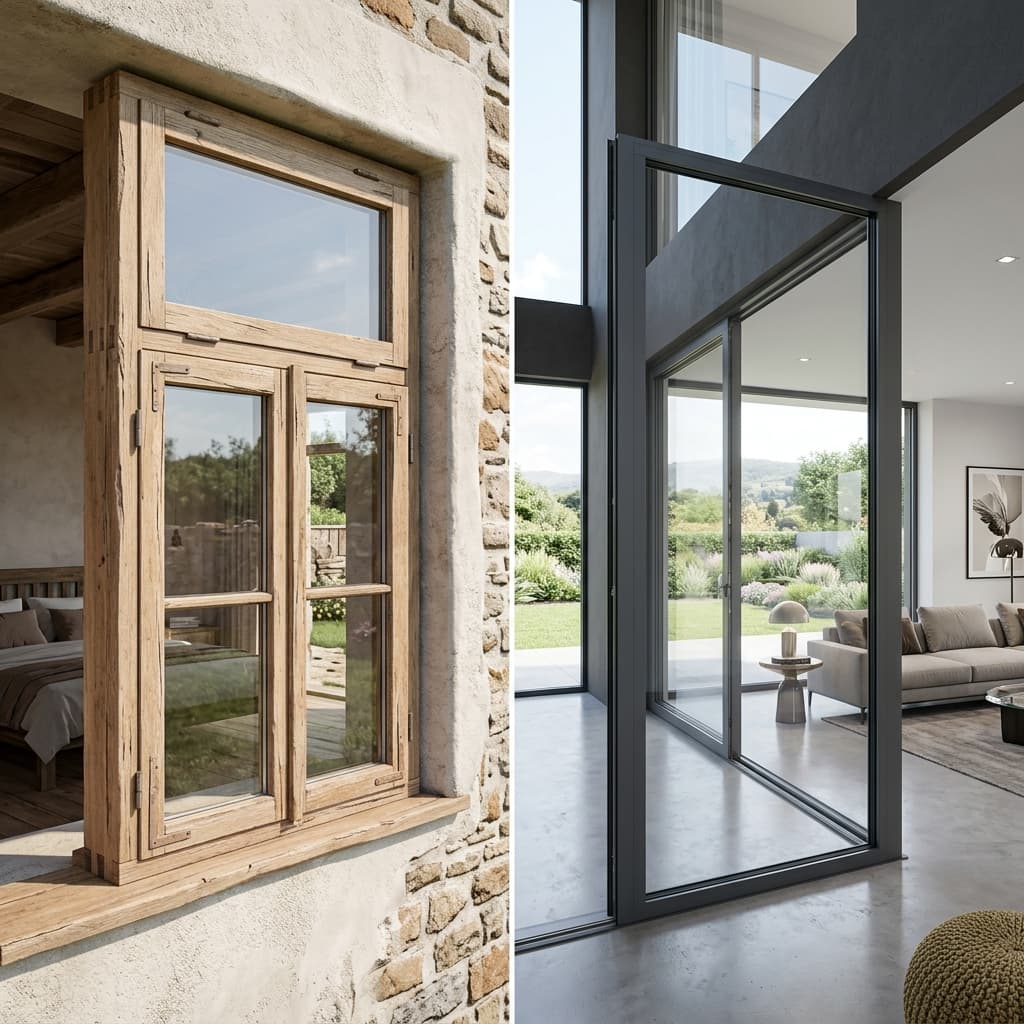
| Factor | Aluminium | uPVC | Wood | Steel |
|---|---|---|---|---|
| Lifespan | 40–60 years | 20–30 years | 10–20 years | 20–40 years |
| Corrosion Resistance | Excellent | Excellent | Poor | Moderate |
| Maintenance Cost | Very Low | Low | High | Moderate |
| Recyclability | 100% recyclable | Partial | Biodegradable | Recyclable |
| Slim Profile / Design | Excellent (5–15mm) | Moderate | Moderate | Moderate |
| High-Rise Suitability | Best in class | Limited | Not suitable | Suitable |
| LEED / Green Certification | Supports fully | Partial | Conditional | Partial |
| Verdict | Best Overall Value | Budget Option | Declining Use | Niche Use |
We have also published an exhaustive, parameter-by-parameter analysis in our Aluminium vs uPVC Windows comparison guide to help you compare the aluminium upvc windows price difference and decide which material is perfect for your home's unique constraints.
Precision Engineering. Maximum Value — Even Now.#
Based in Navi Mumbai & Thane, Samani ECC manufactures and supplies premium aluminium and uPVC window, door, and façade systems — engineered for long-term performance in India's coastal, high-humidity climate. Utilizing certified jindal doors and windows profiles, every system is built to withstand years of monsoon, UV, and wear without replacement. If you are comparing white aluminium windows prices or standard anodized frames, we offer transparent, factory-direct quotes.
Additionally, we advise on long-term maintenance. While low-grade setups require frequent resealing aluminum windows maintenance to stop leaks, our premium systems feature pre-inserted compression gaskets, eliminating the need for periodic silicon resealing.
- 🪟 Aluminium Windows: Sliding, casement, top-hung, folding, and skylight variants. Slim profiles maximize light. Multi-point locking for security. See our detailed Aluminium Sliding Windows Price guide for per-sq-ft rate breakdowns.
- 🚪 Aluminium Doors: Sliding, bi-fold, entrance, and heavy-duty options. Toughened glass with multi-point locks and powder-coated finishes.
- 🏢 Commercial Solutions: Shop fronts, office partitions, and glazing systems. Built for high-traffic areas. Trusted by commercial and industrial clients across MMR.
- 💎 Luxury Slimline Range: 5–15mm ultra-slim profiles for high-end residential and hospitality projects. Double-sealed interlocks for noise and weather performance.
- 🏗️ Industrial Systems: Heavy-duty doors and windows engineered for factories, warehouses, and industrial parks. High-load extruded tracks with weatherproof seals.
Plan Smarter in 2026: Lock in Your Price Today#
Every week of delay is a week of higher replacement costs. Lock in your specification now with Samani ECC — and get maximum value from a rising-price market. Contact us today for a free custom consultation.
Keywords

Abdus Salam
Expert Contributor
Expert in architectural aluminium systems and uPVC fenestration with over 20 years of experience in the Indian construction industry.
Related Articles

Technical Guide
uPVC Window Profiles – What to Look For & Why It Matters (2026 Guide)
Discover what uPVC window profiles are and why they dictate thermal insulation, structural strength, weather resistance, and long-term durability in Indian homes.

Technical Guide
Multi-Chamber uPVC Windows – What Are They and Why Do They Matter? (2026 Guide)
Discover how multi-chamber uPVC windows improve thermal insulation, reduce urban noise, enhance structural strength, and lower AC energy bills in Indian homes.
Material Comparison
Aluminium vs uPVC Doors — Which Should You Choose in India?
Detailed comparison of aluminium vs uPVC doors for Indian homes. Compare prices per sq ft, thermal insulation, monsoon durability, balcony suitability, and 10 FAQs.
Ready to Transform Your Space?
Get a free, no-obligation technical consultation and personalized quote for your premium aluminium window and door requirements. Our experts are ready to bring your vision to life.
